Successful inauguration of the two-day event series “TheAthinai: Aquatic Athens”
The event cycle “Aquatic Athens” successfully commenced yesterday, Thursday, July 2, 2026, with extensive participation, as part of the annual “TheAthinai” initiative organized by the Piraeus Bank Group Cultural Foundation. This action is conducted in close collaboration with the Municipal and Historical Archives Department of the City of Athens and the Historical Archives of EYDAP.
During the first day, the scientific assembly focused on the historical, technical, and social dimensions of Athenian water supply.
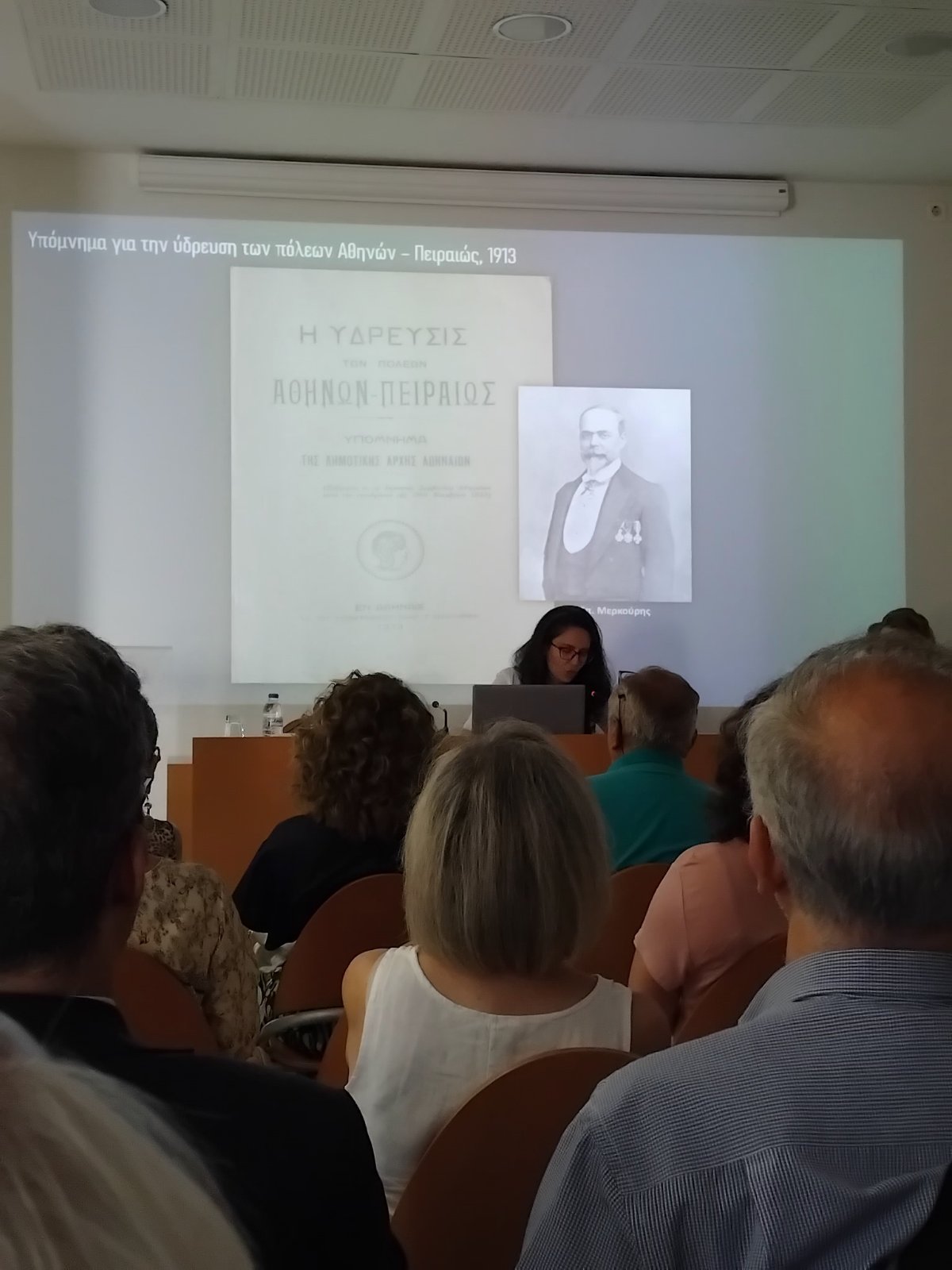
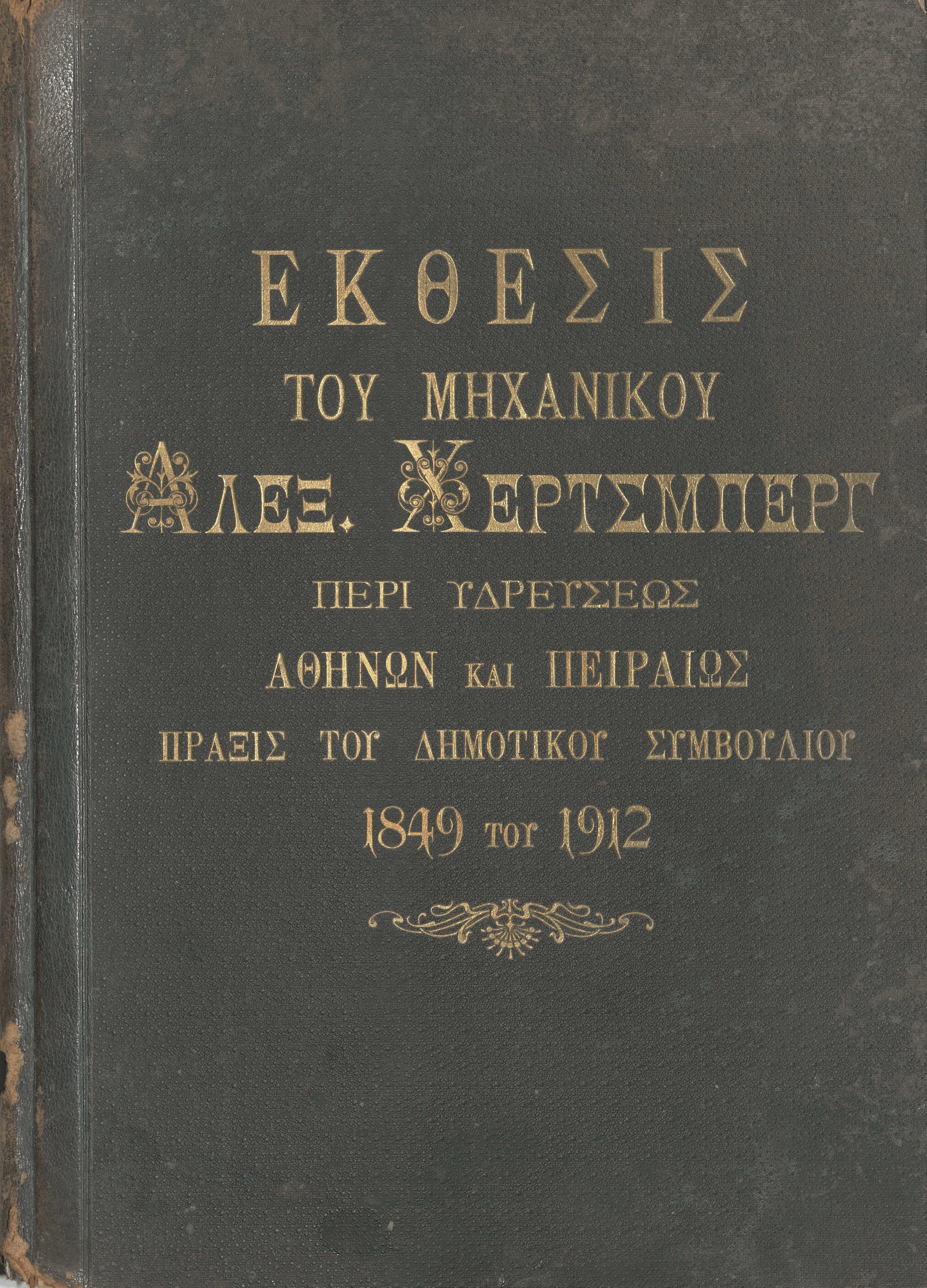
The inaugural presentation by the Head of the Municipal and Historical Archives Department, Vasiliki Sfika, titled “Precious Water,” pointed out the historical role of Local Government. Through a rigorous examination of primary sources from the Department’s collections, Ms. Sfika analyzed the dual axis of water management by the Municipality of Athens, from the city’s proclamation as the capital (1834) to the early 20th century. On one hand, she foregrounded the fiscal significance of water as a critical revenue source and a credit lever for the Municipality; on the other, she traced the evolution of the most crucial water supply studies of the era, a period when water scarcity afflicted the Athenian populace.
Concurrently, the address illuminated the historical transition from local and piecemeal interventions to the imperative need for the design of major supra-local projects. This progression constituted a field of intense institutional and ideological conflict between the Local Government (which vigorously demanded the “municipalization” of the network and the protection of its aquatic assets as a social good) and the central state authority.
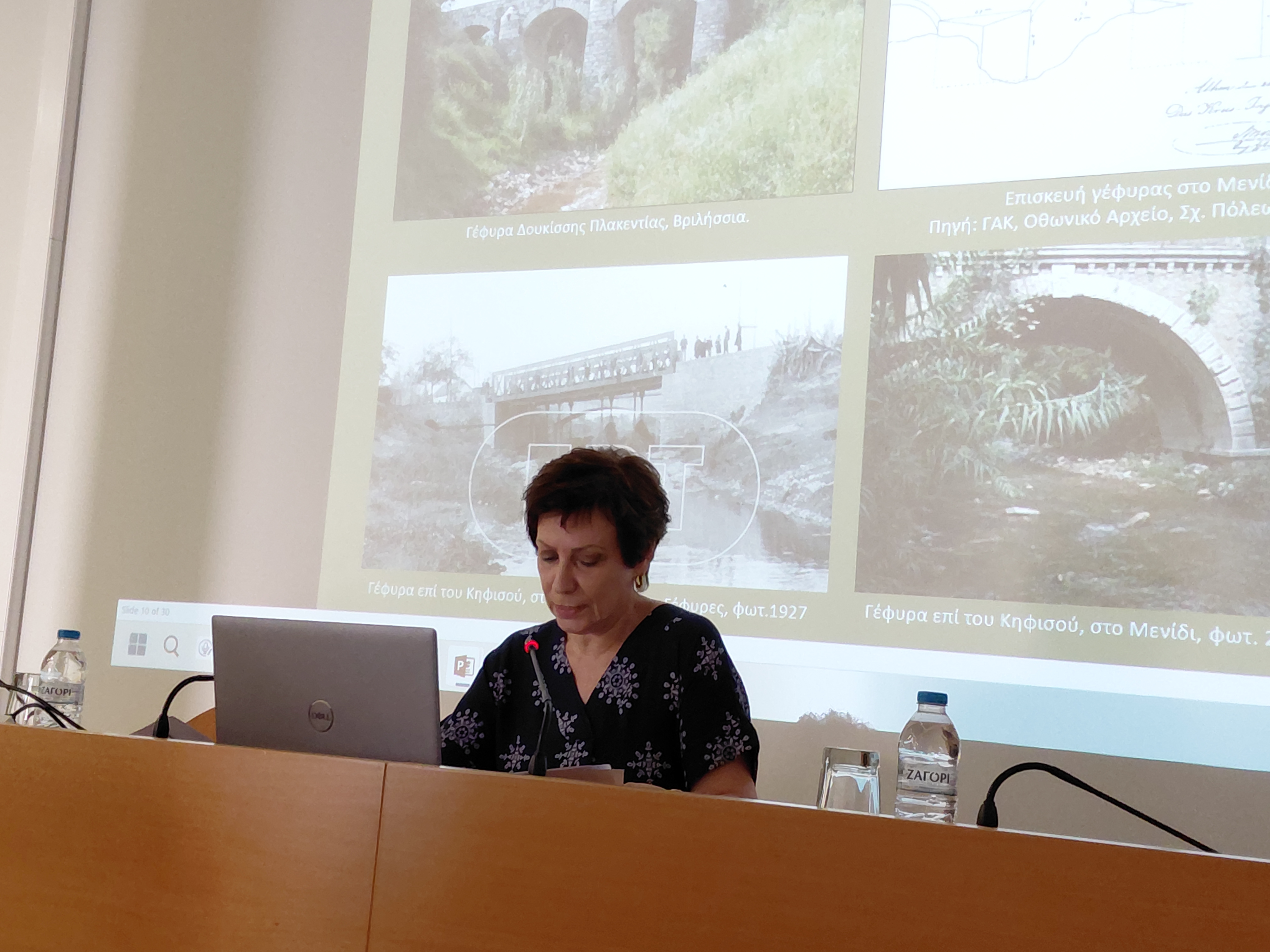
Equally significant contributions complemented the agenda. Maria Daniil, Head of the General Directorate of Technical Services & Works of the City of Athens, charted the technical and historical evolution of the “Ilissos riverside crossings,” thereby demonstrating their role in the urban development of modern Athens. Among other topics, special attention was directed toward the extensive architectural and topographical documentation of the emblematic three-arched bridge in the Agia Foteini area. The Othonian structure remains preserved within a culvert beneath the contemporary road network.
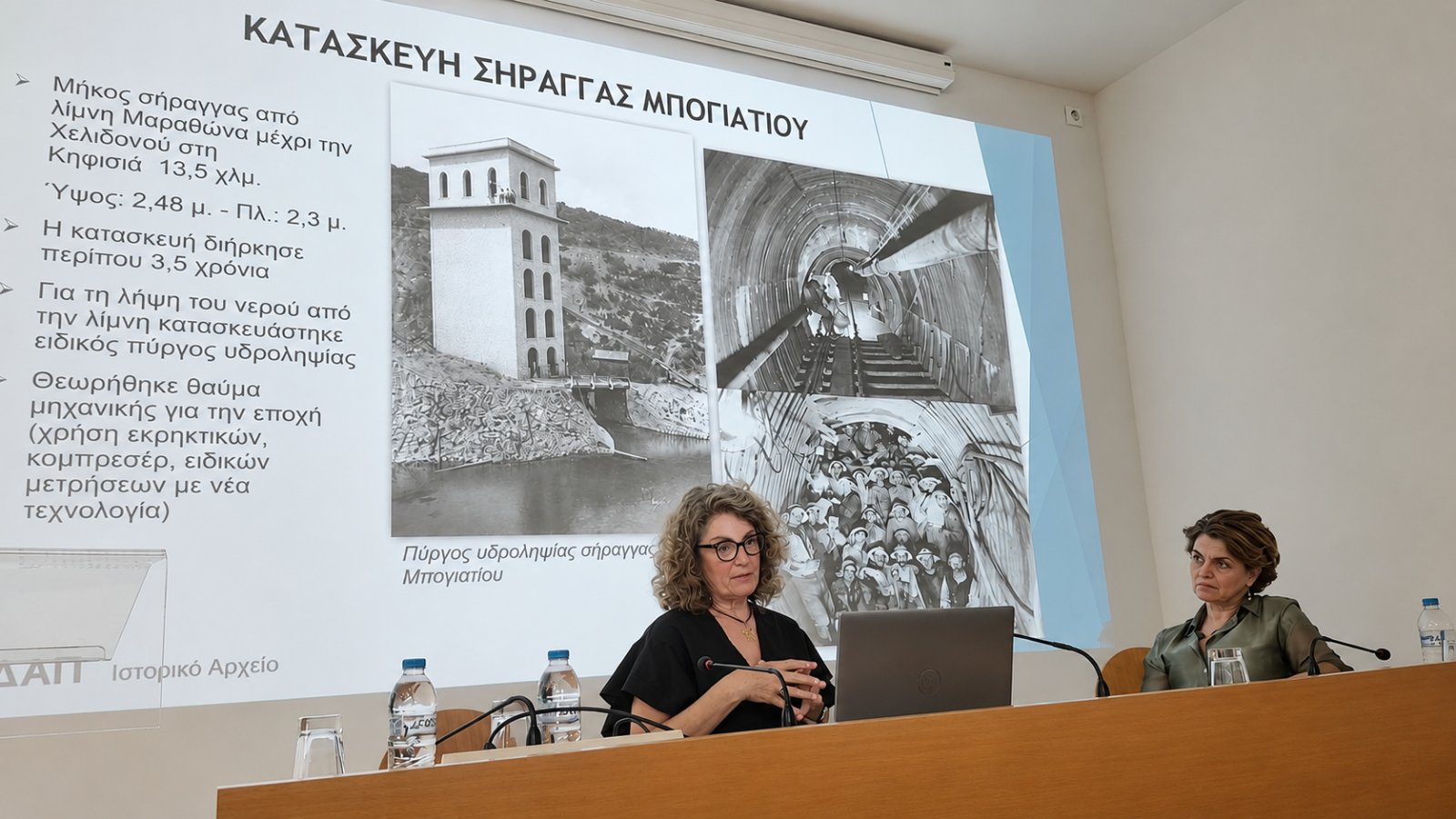
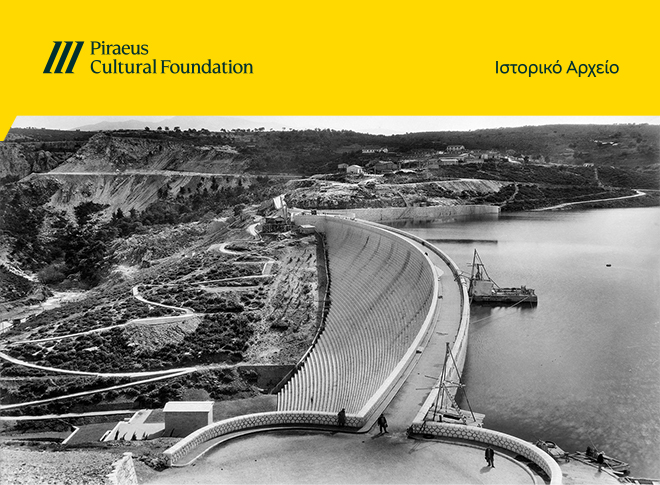
Lamprini Tzamourani, Head of the EYDAP Historical Archives, explicated the transition of the Athenian water supply “From Marathon to Mornos” (1929-1979). Utilizing substantial primary records (rich audiovisual and paper material), she established how the expansion of hydraulic infrastructures served as the necessary response to the chronic water shortage issue and the rapid urban growth of the capital.
Finally, Giorgos Sachinis, EYDAP Strategy and Innovation Director and member of the UrbanDig Project NGO, comprehensively expounded the connection between water and cultural capital. His lecture concentrated on the active role of civil society regarding the dynamic advocacy for sustainable solutions to water resource management issues. Through this approach, water clearly emerged not solely as a material commodity, but also as a critical domain of collective intervention and social responsibility.
The two-day event series will conclude on Saturday, July 4, 2026 (09:00-13:00), featuring a scheduled guided tour of the EYDAP Dam and Museum in Marathon. The executives of the EYDAP Historical Archives Service Lamprini Tzamourani and Foteini Kapsali (Topographical Engineer TE), have assumed the curation and coordination of the tour.