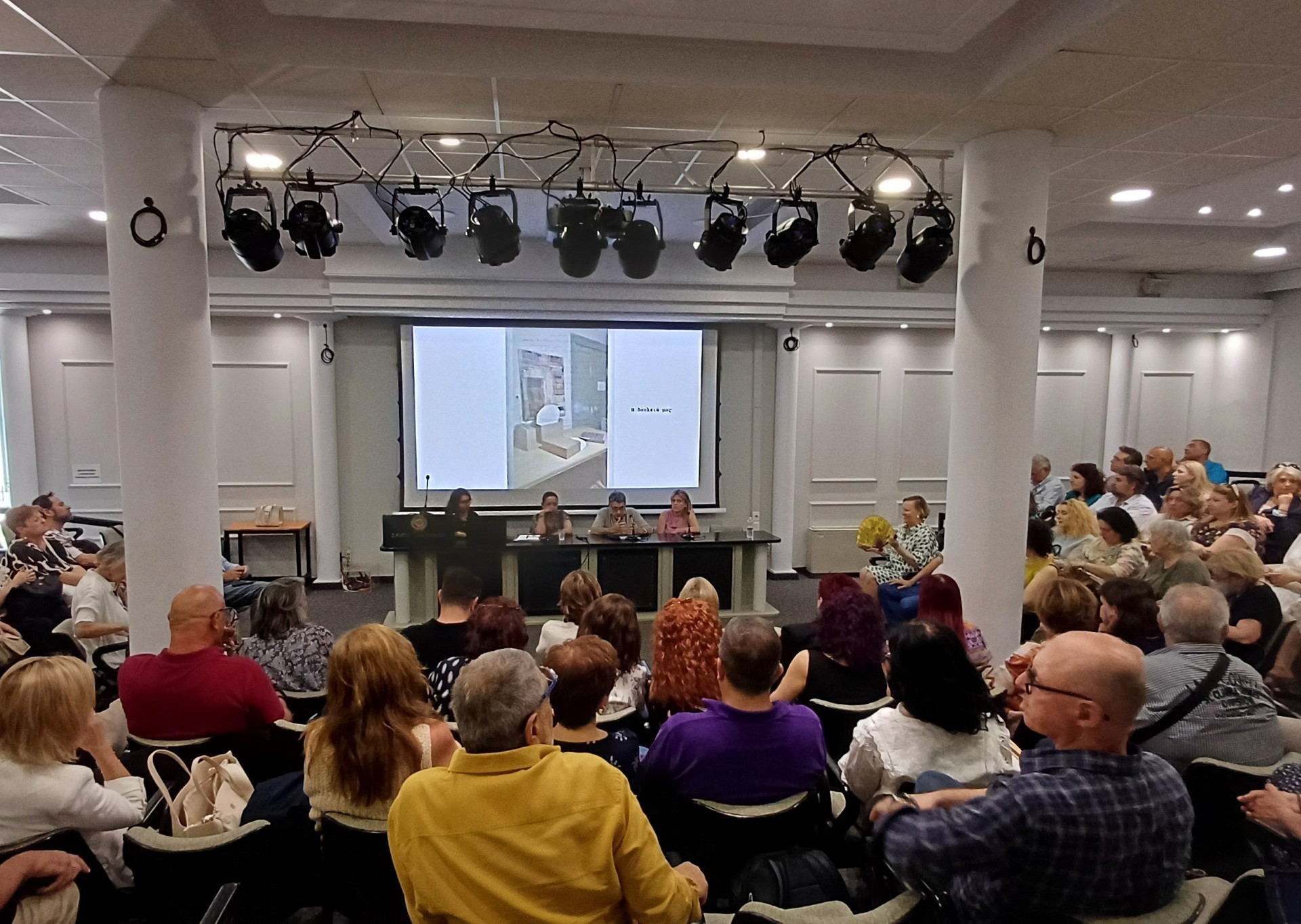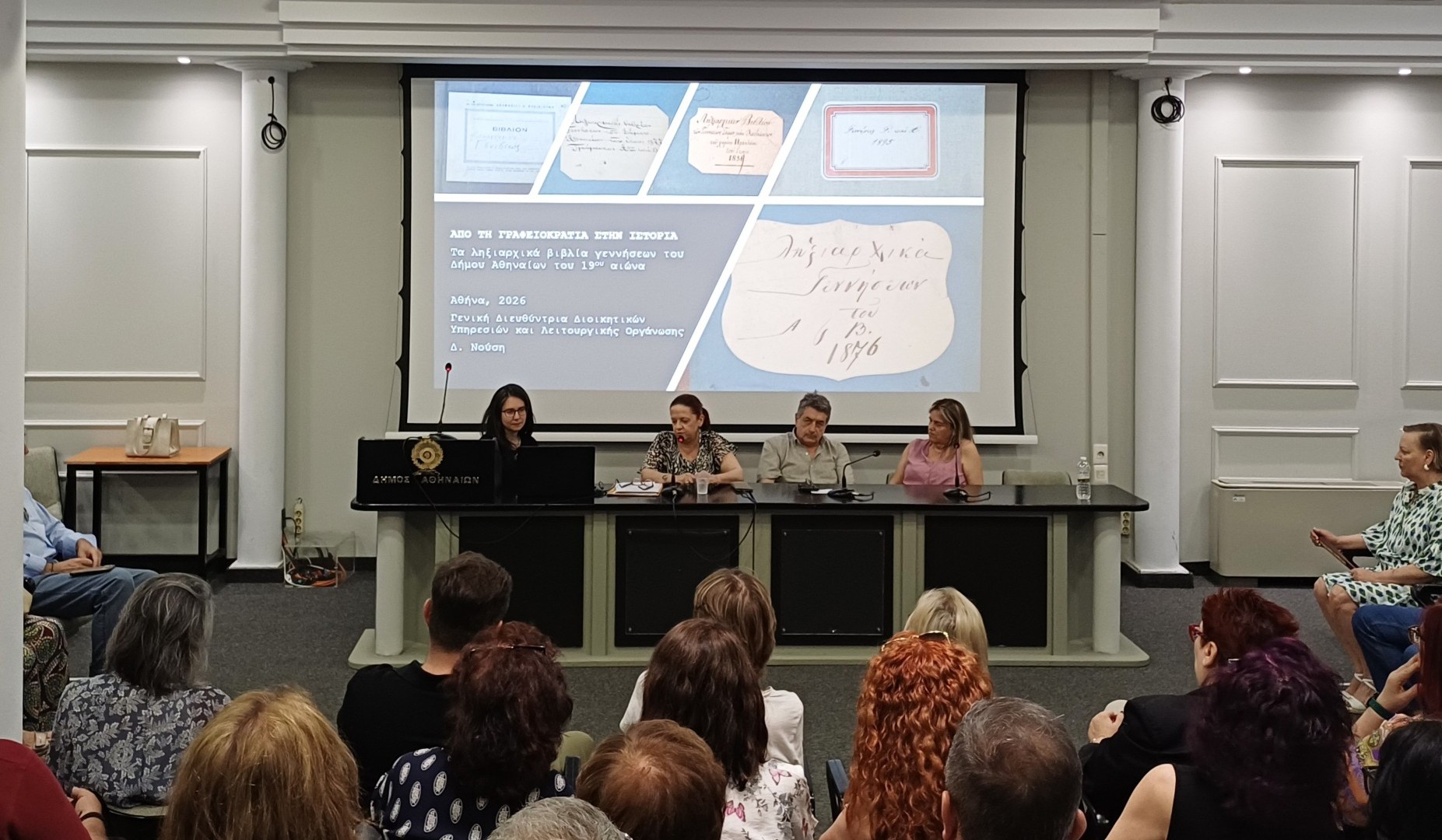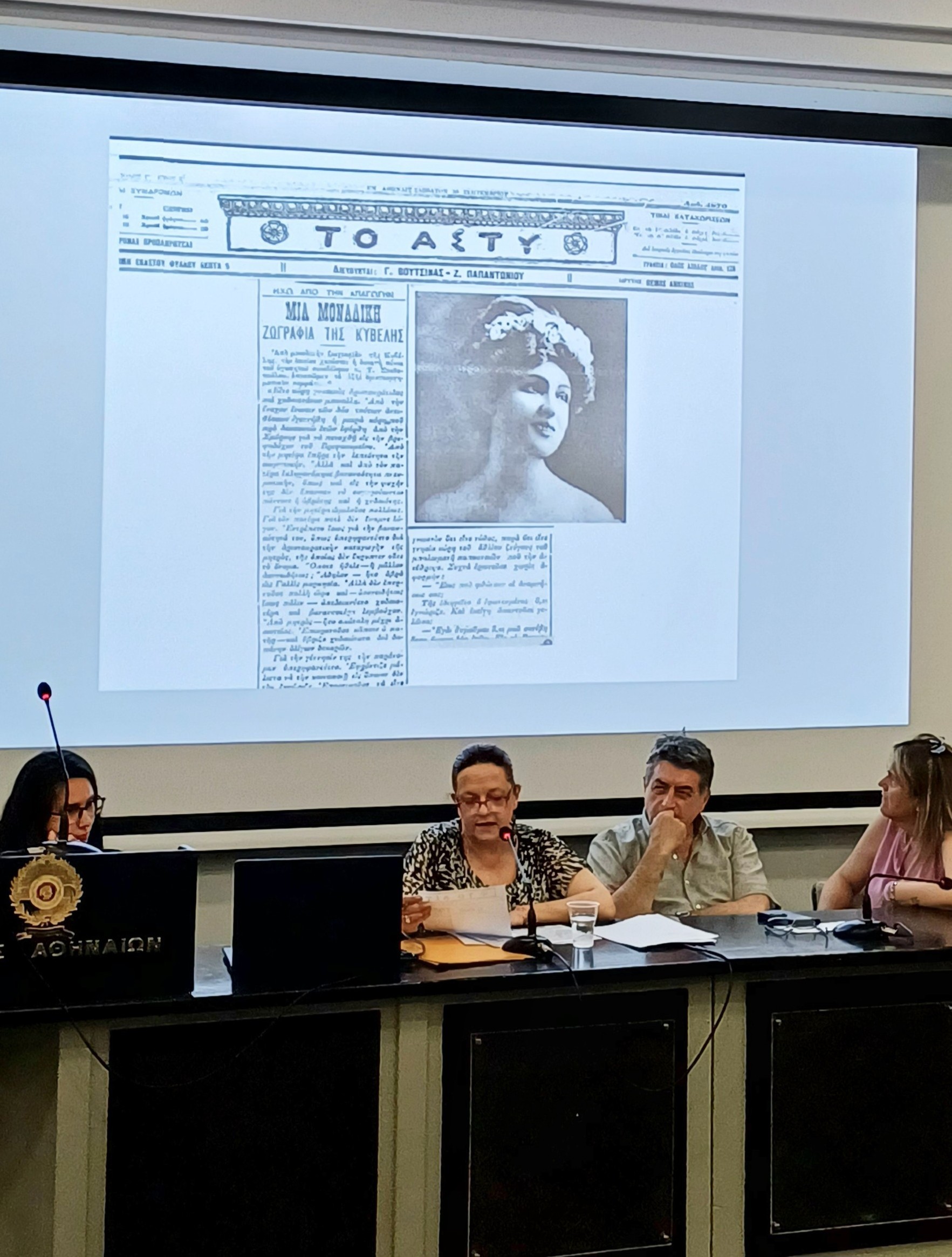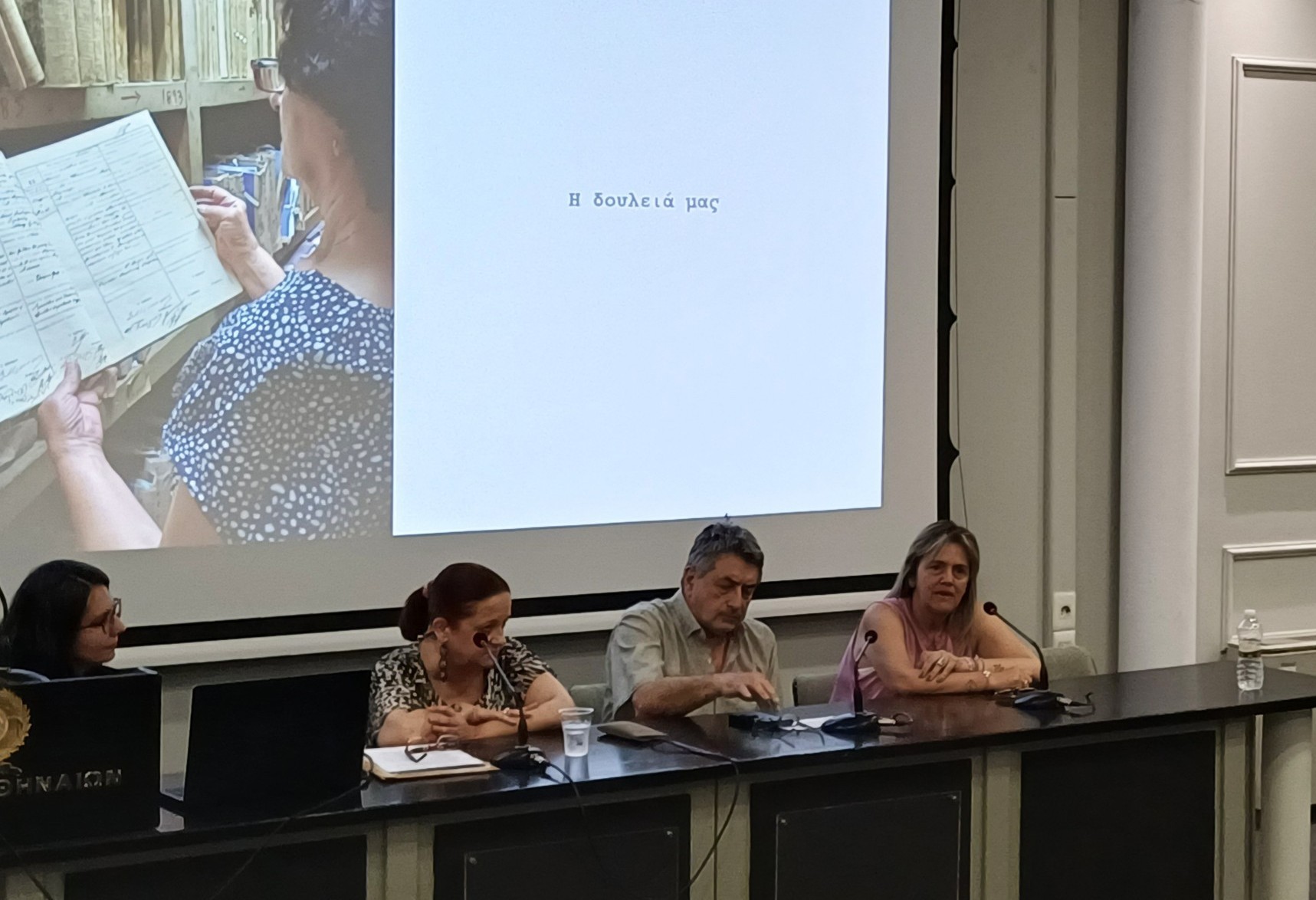

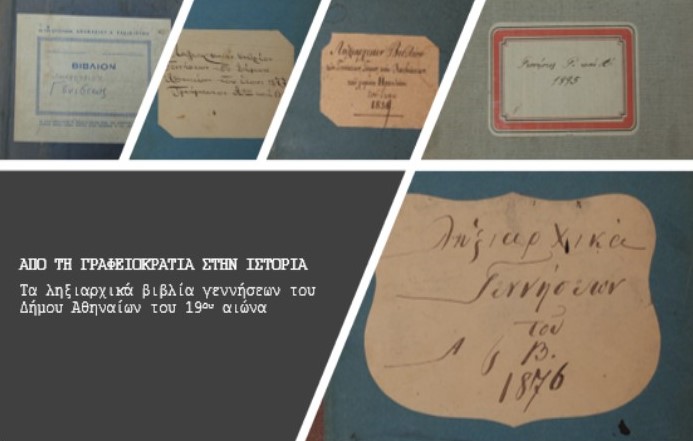
The event hosted by the Municipality of Athens, titled “From Bureaucracy to History,” was successfully held on Monday, June 22, at the “Antonis Tritsis” Amphitheater of the Cultural Center. Organized on the occasion of International Archives Day and United Nations Public Service Day, the event focused on presenting the first digital reproductions of the 19th century Birth Registries of Athens. These records, serving as vital historical documents, are now being transferred to the Historical Archives of the Municipality of Athens for their preservation and utilization in research.
The discussion panel featured municipal officials, highlighting the intrinsic connection between administrative practice and historical documentation.
Municipality of Athens Secretary General Giannis Vakountouzis welcomed the attendees, reaffirming the importance of digitization for the perpetual preservation of archival heritage. He observed that through this process, the registries emerge as a valuable reflection of the human geography of the era. Furthermore, he noted that the archival document transcends its strictly administrative function, enabling a documented transition from a simple bureaucratic act to historical knowledge.
In her address, General Director of Administrative Services and Operational Organization Dimitra Nousi linked the functioning of institutions with the social history of the city. She maintained that the past bureaucratic records of the registry offices and the historical data regarding the Municipal Foundling Hospital and the municipal parishes where infants were left during the 19th century together constitute a living historical memory. This memory serves as a valuable point of reference and a source of knowledge for today’s services, civil servants, researchers, and citizens alike.
Ms. Nousi added that historical archives are a key indicator of quality, continuity, and institutional maturity for any organization. In this context, she elaborated on the significance of bureaucratic record keeping as a fundamental mechanism of administration. Public administration, through the methodical recording and archiving of its actions, is not merely limited to the daily service of citizens; it simultaneously shapes invaluable historical documents that acquire unique significance over time.
Civil Status Directorate Head Amalia Tsichritzi discussed the role of her Directorate as a specialized service directly connected to the public. She explained that the service manages highly significant archives, acting as the primary custodian of critical information that guarantees the historical and administrative continuity of Athens.
Historical and Municipal Archives Head Vasiliki Sfika introduced and coordinated the presentation. She addressed the responsibility of receiving and integrating these important primary sources into the collections of the Archives, the department that oversees the Municipality’s archival policy. She also drew attention to the importance of classifying the material and democratizing access for both the research community and the public, in accordance with European standards.
During the event, the work of the special task force, established for the collection and indexing of the 19th century birth registry data, was also presented. According to the data, 6,673 photographs of archival material were captured. Additionally, a historical retrospective of birth declarations dating back to 1836 was conducted, and aggregated data from the initial operating period of the Municipal Foundling Hospital from 1861 to 1868 were presented to the audience.
The central message of the event is crystallized in the transition “from bureaucracy to history” and “from experience to memory,” affirming that municipal archives remain living tools for understanding our society.