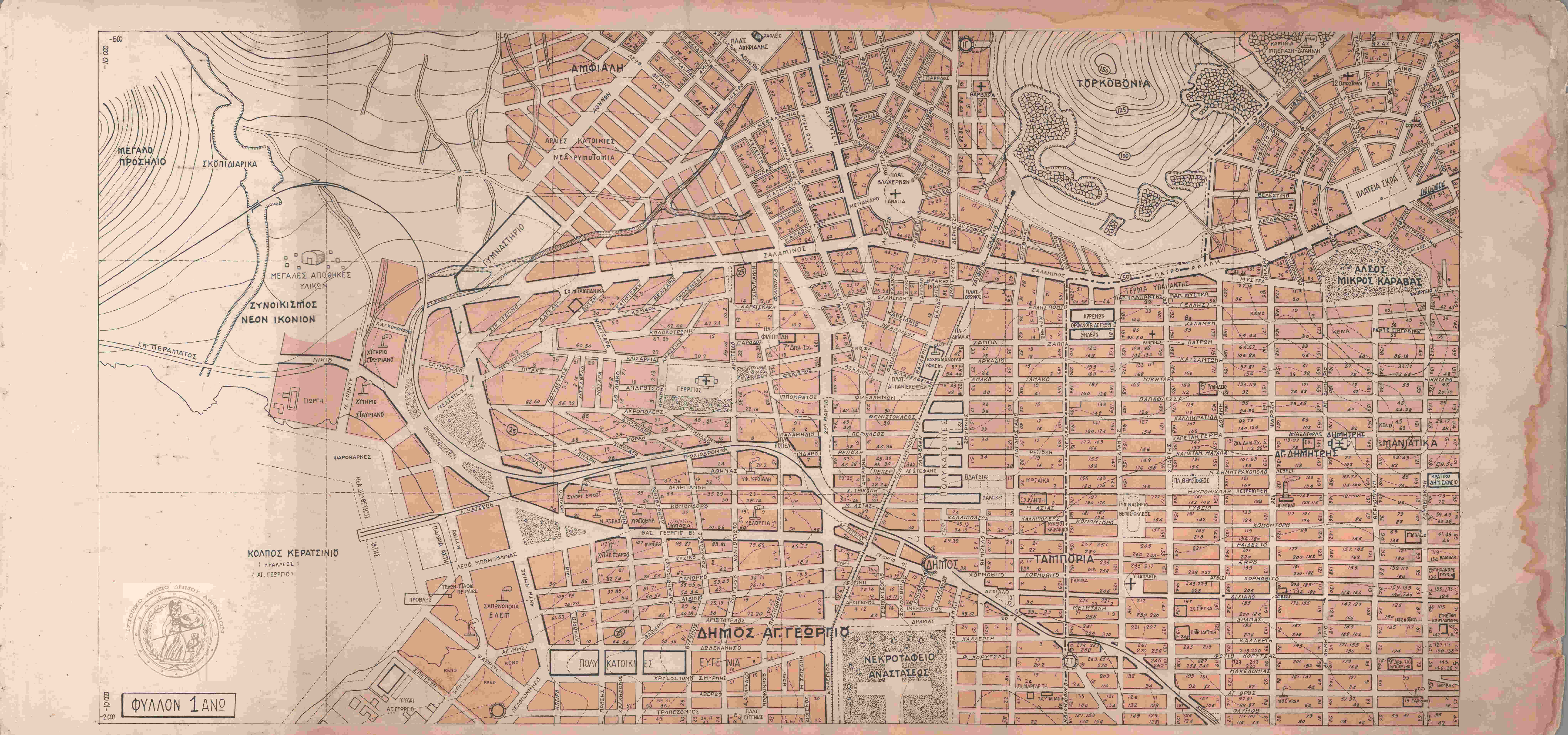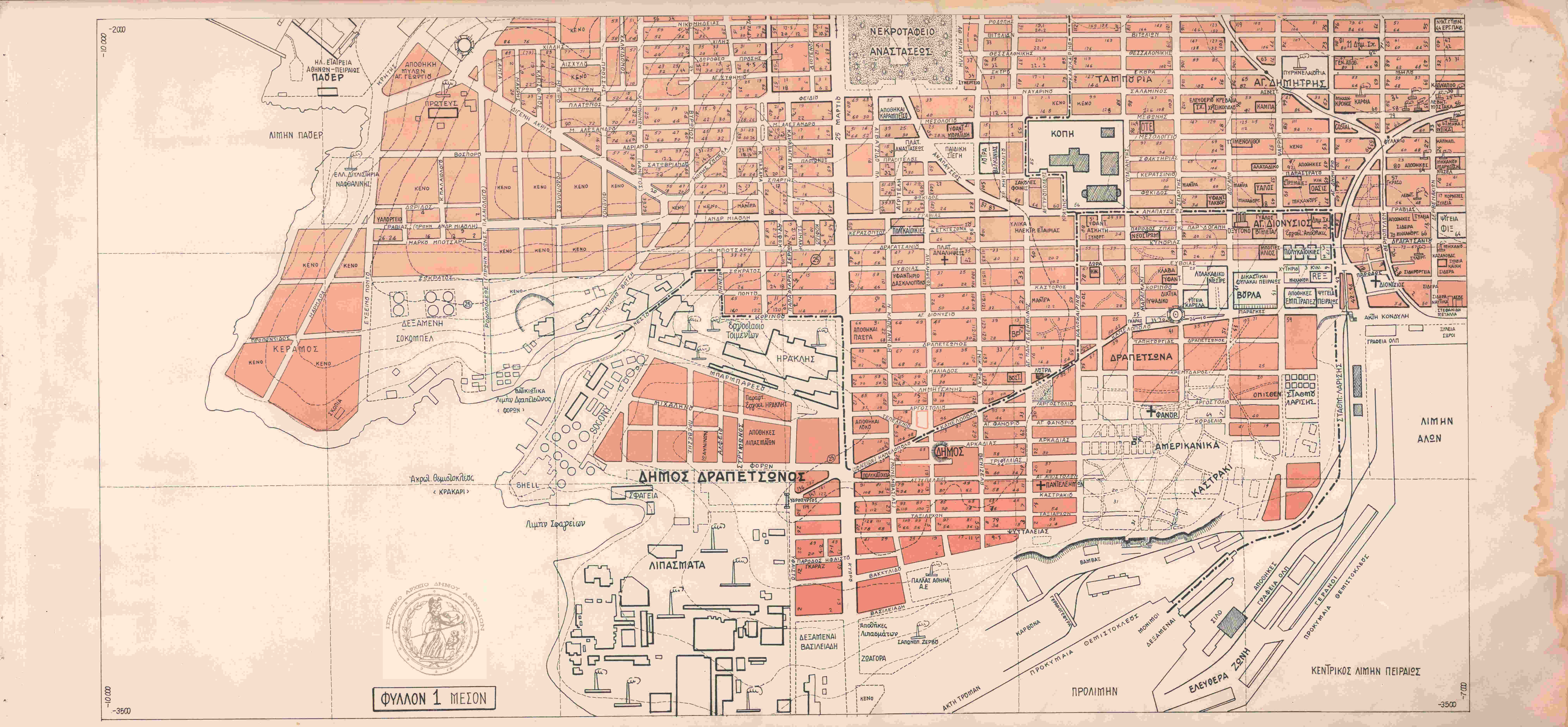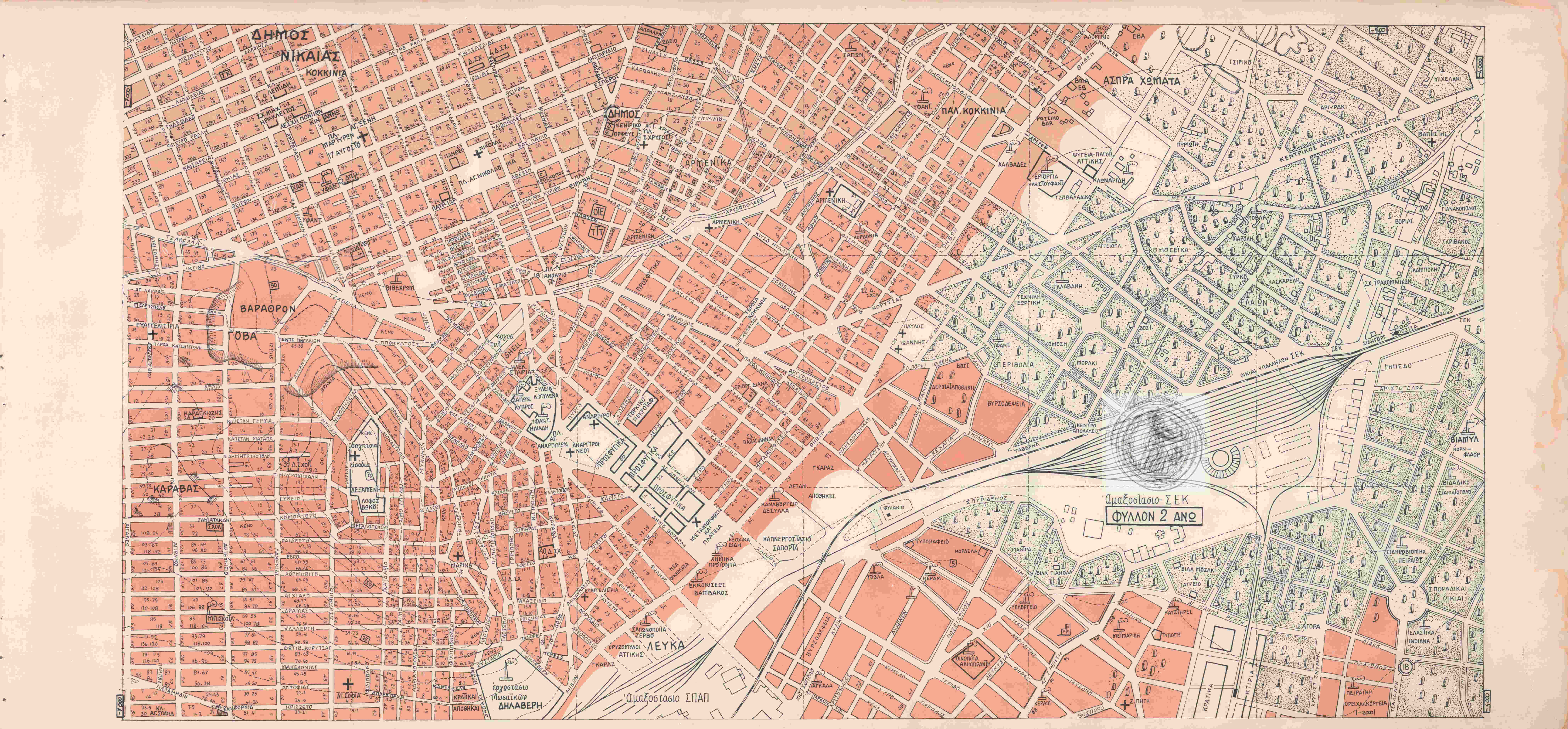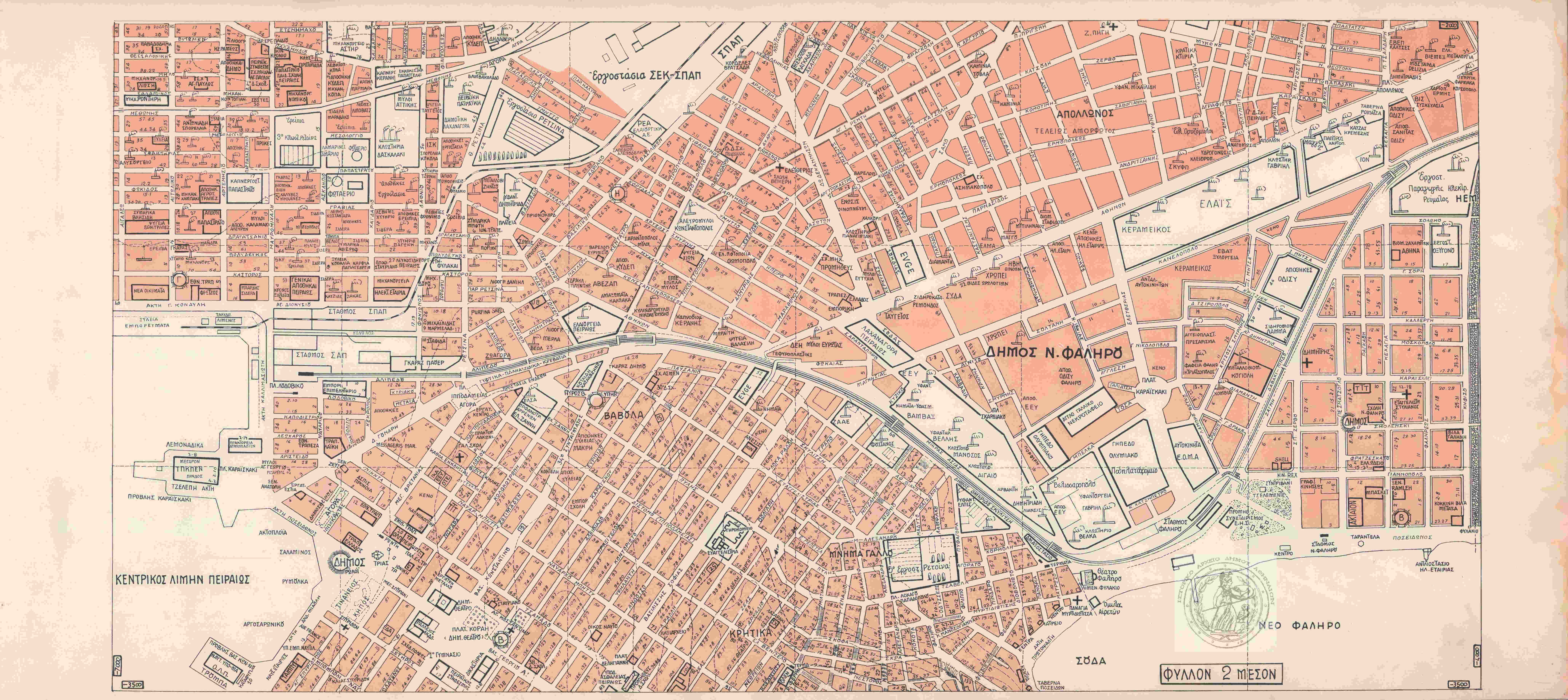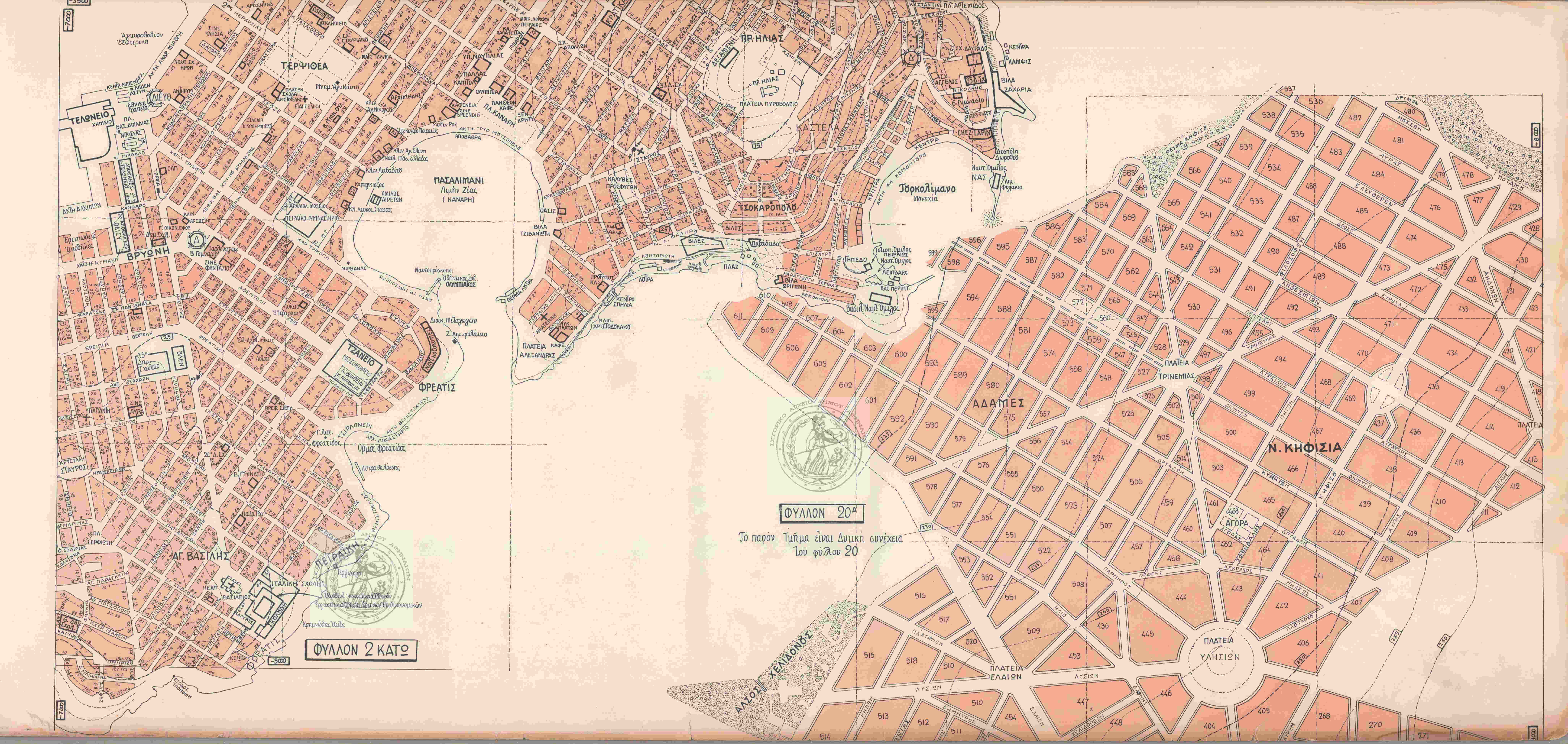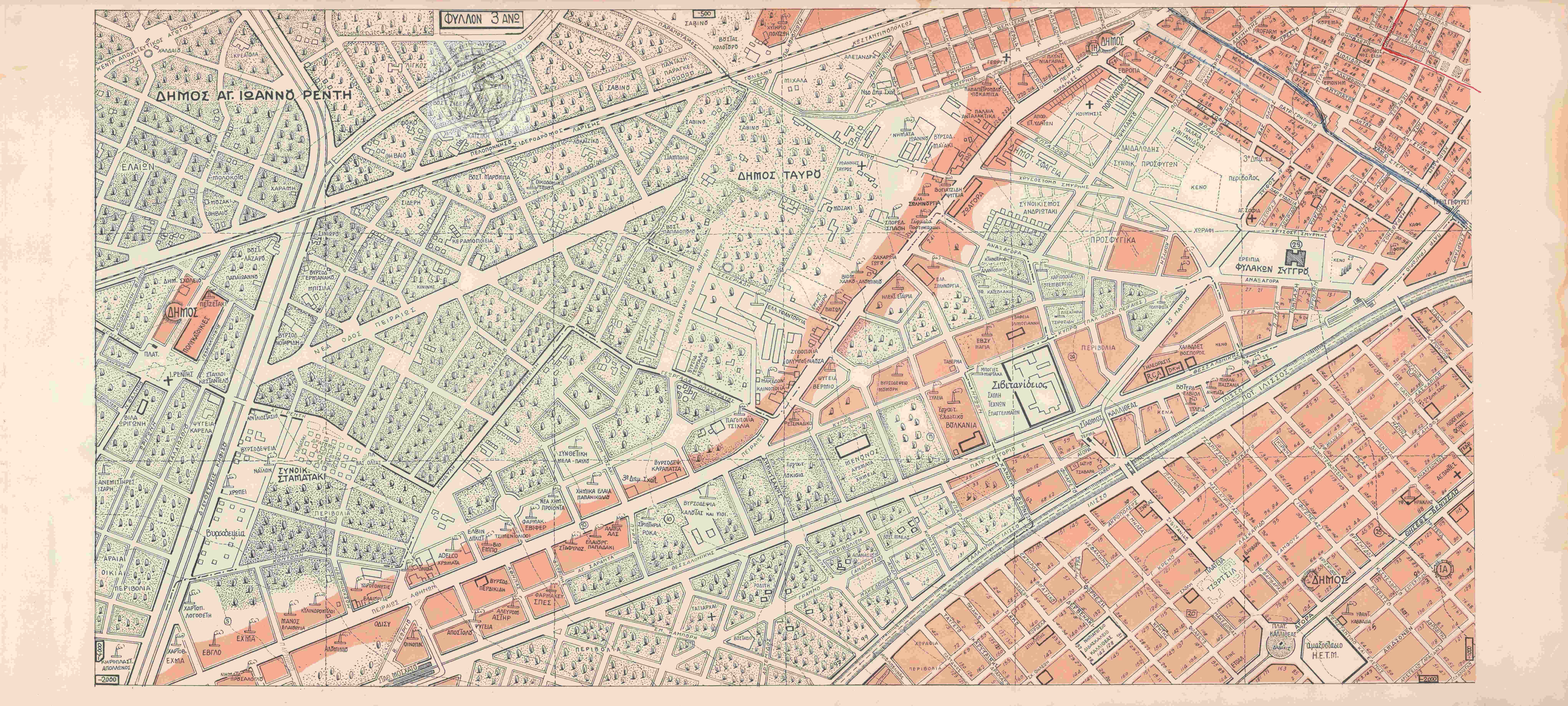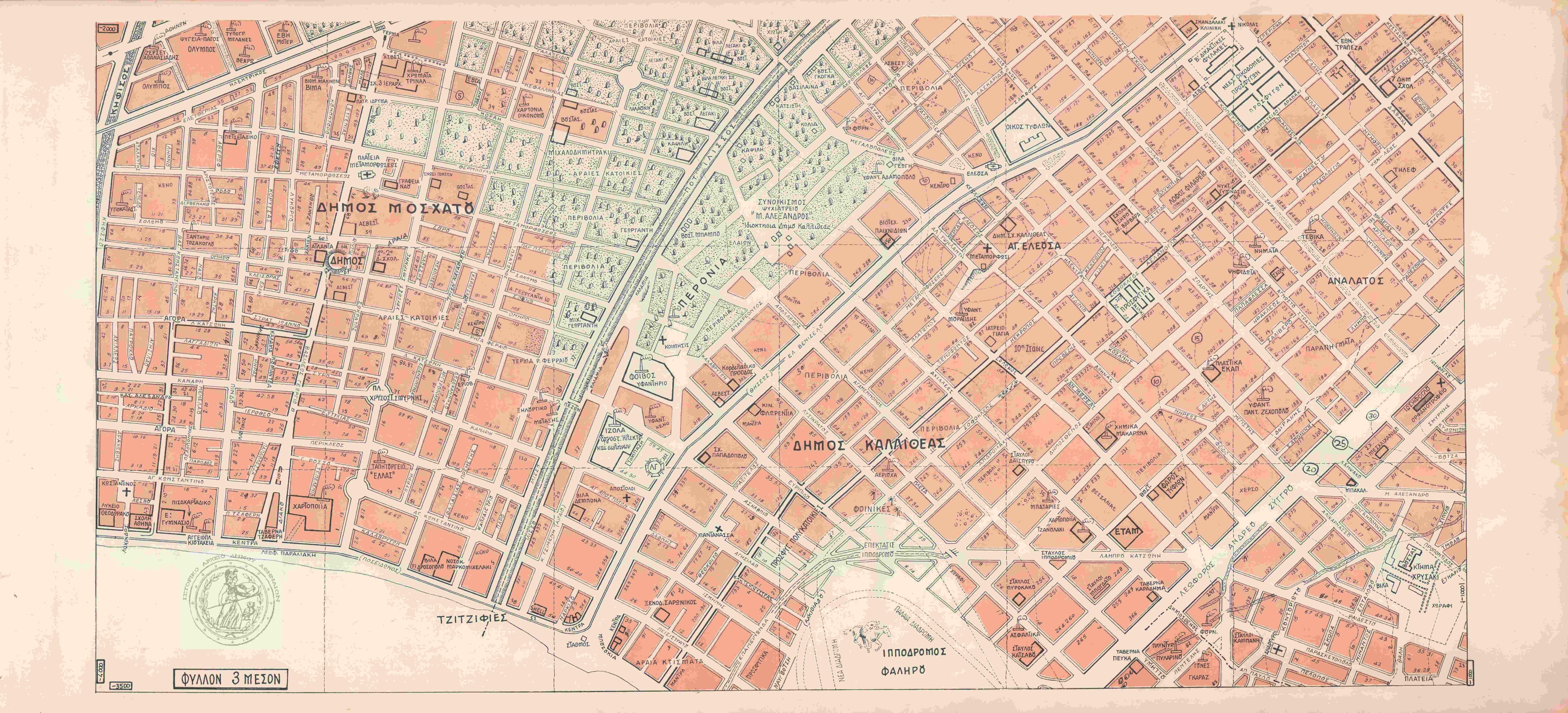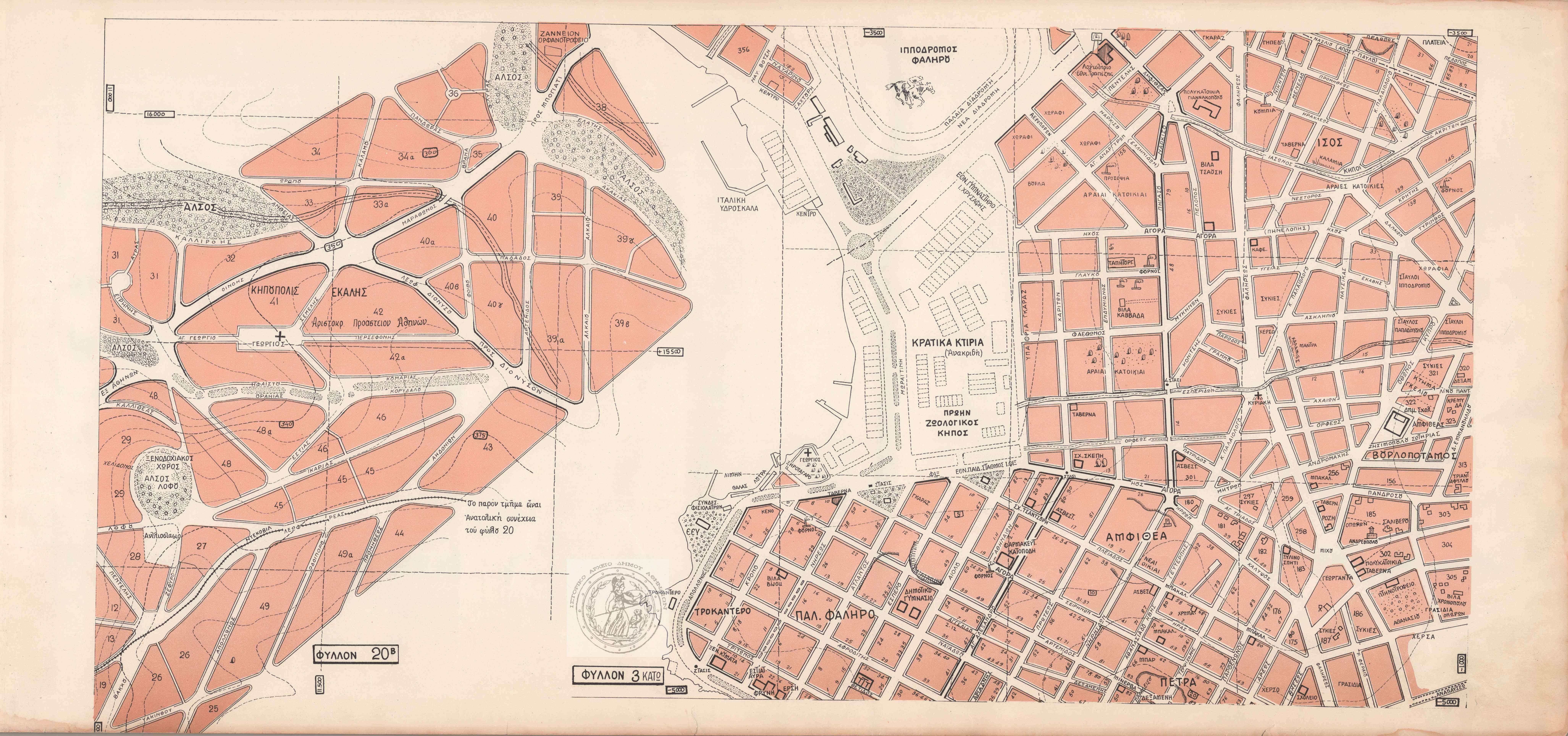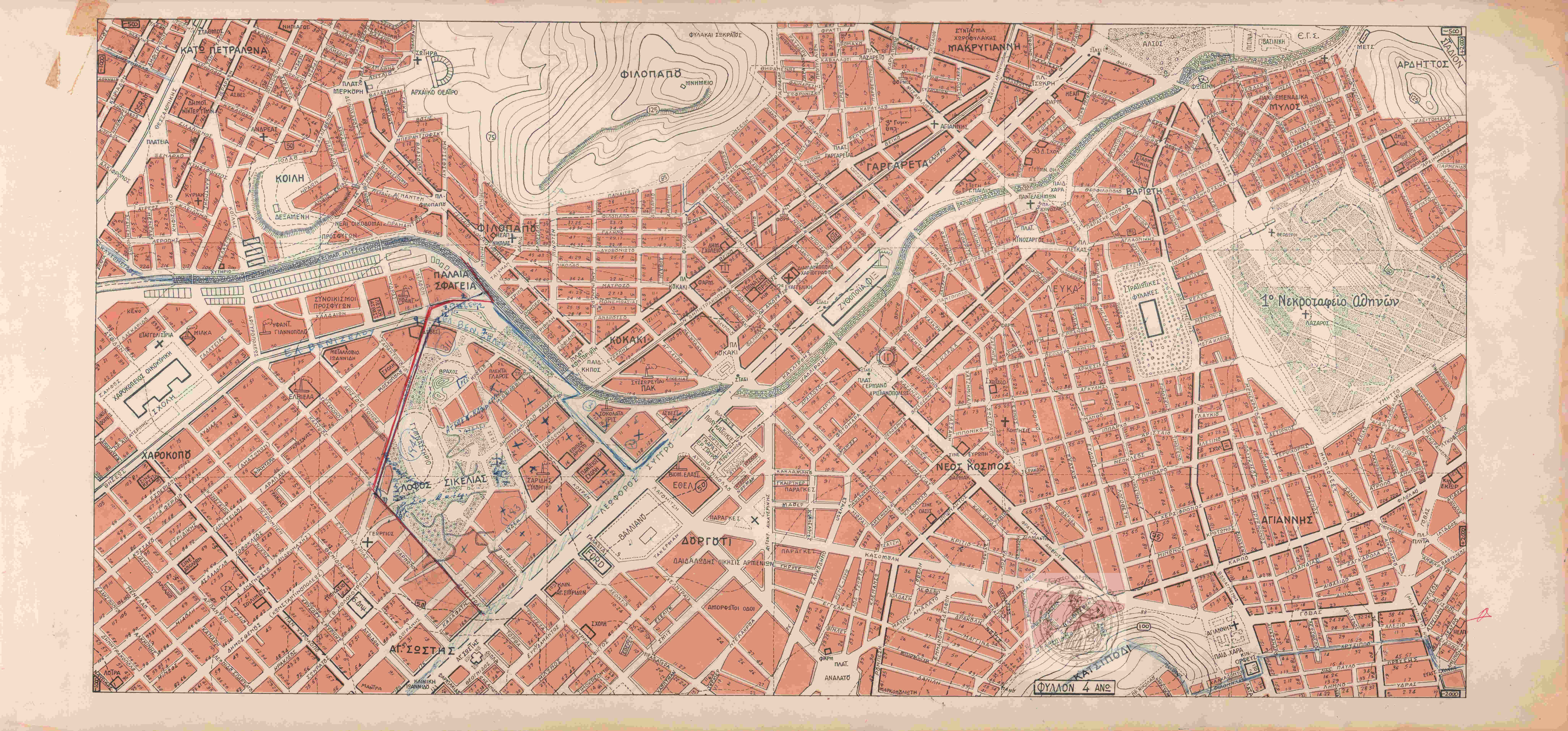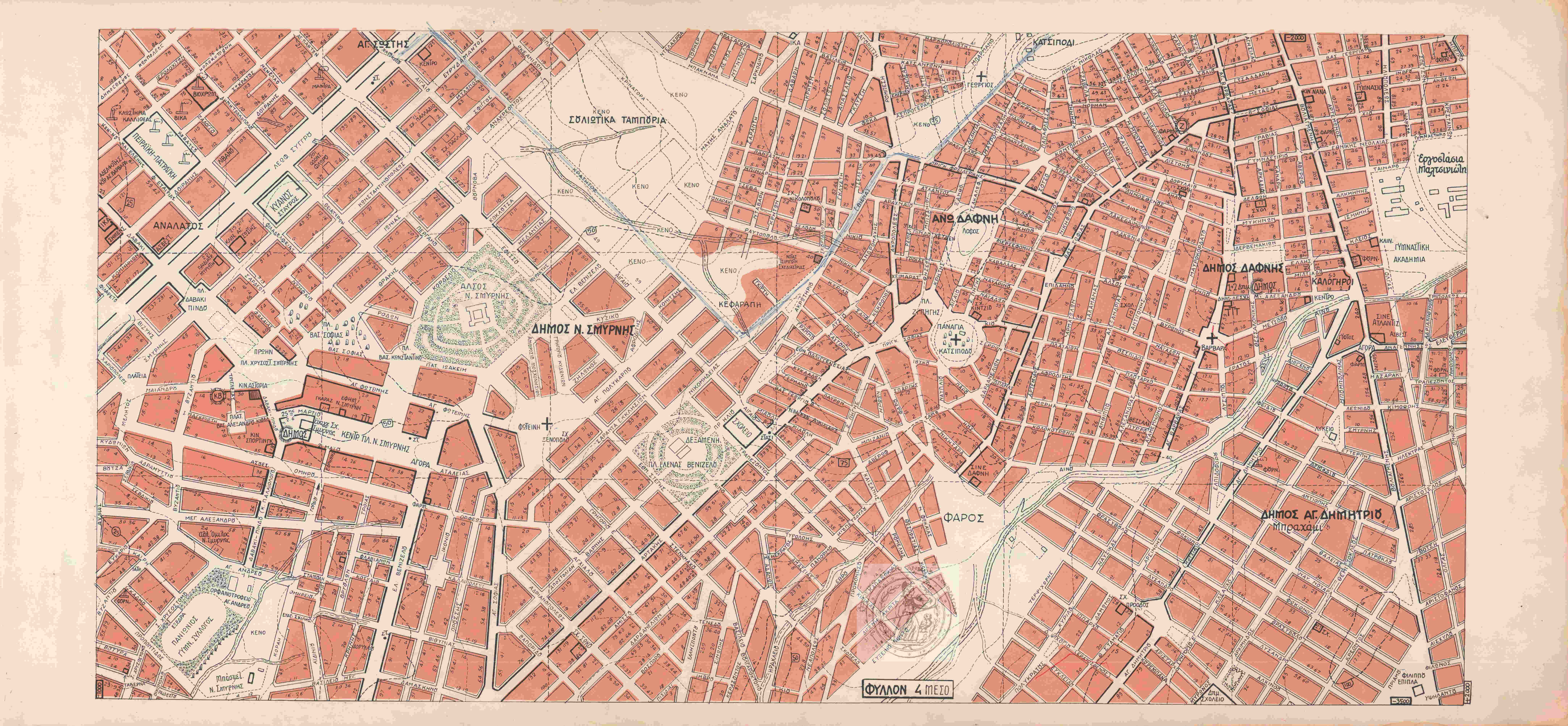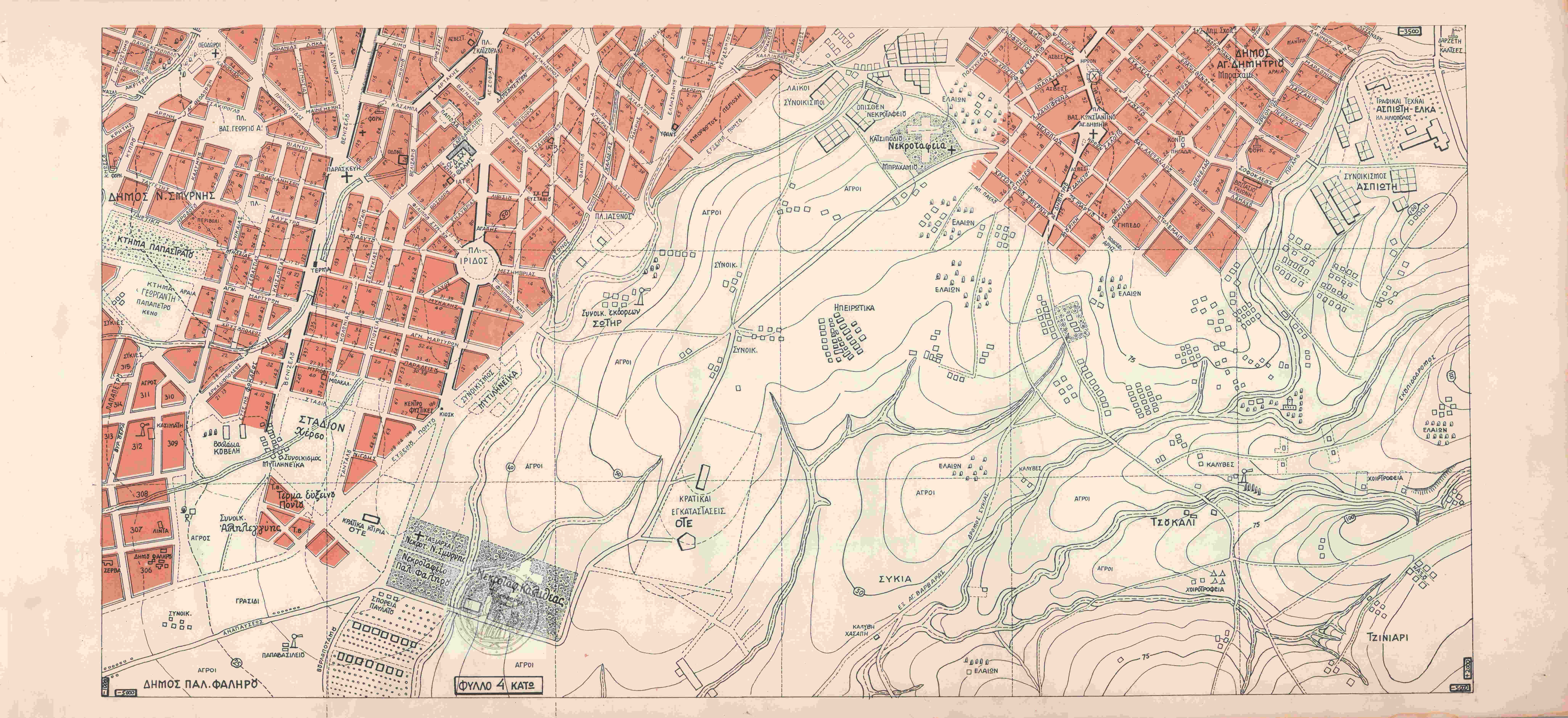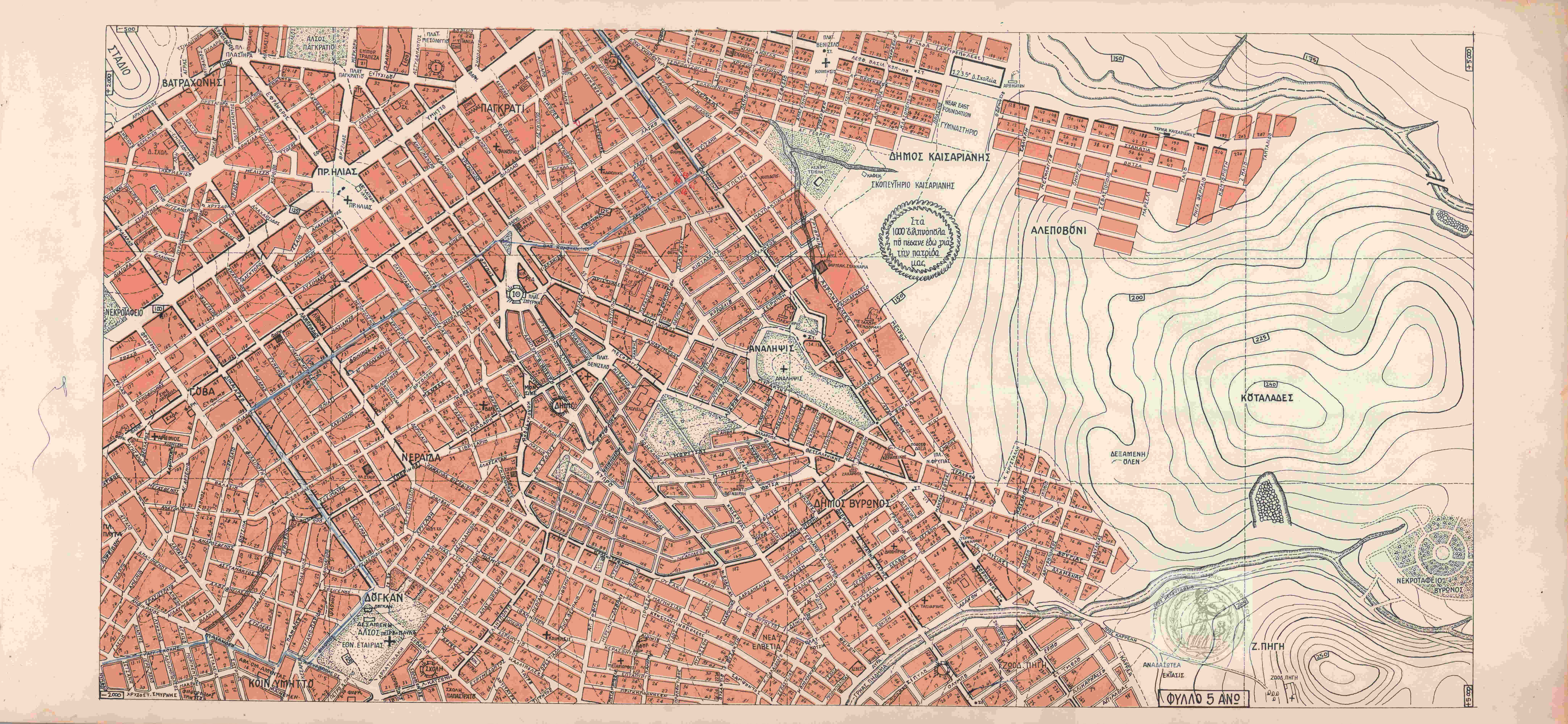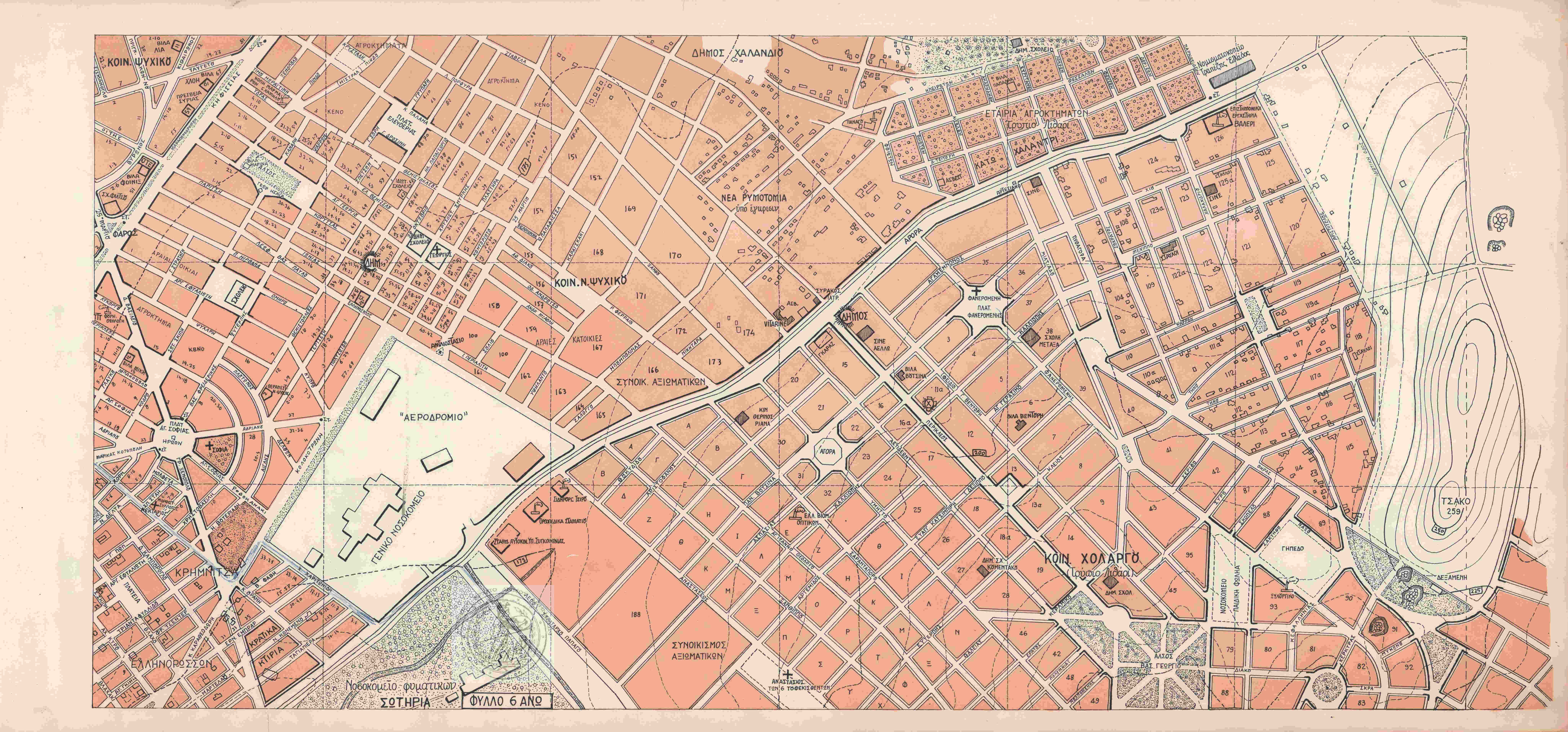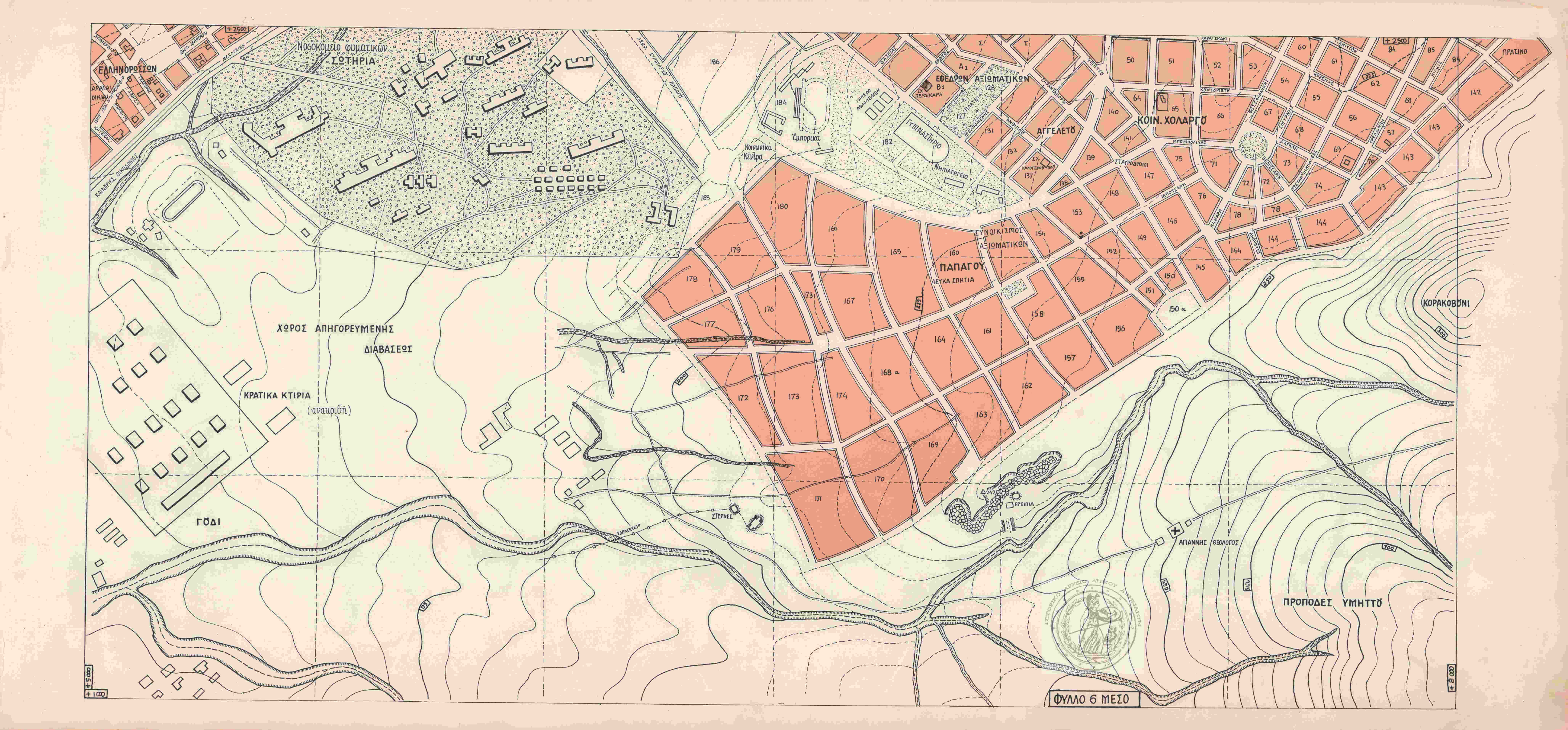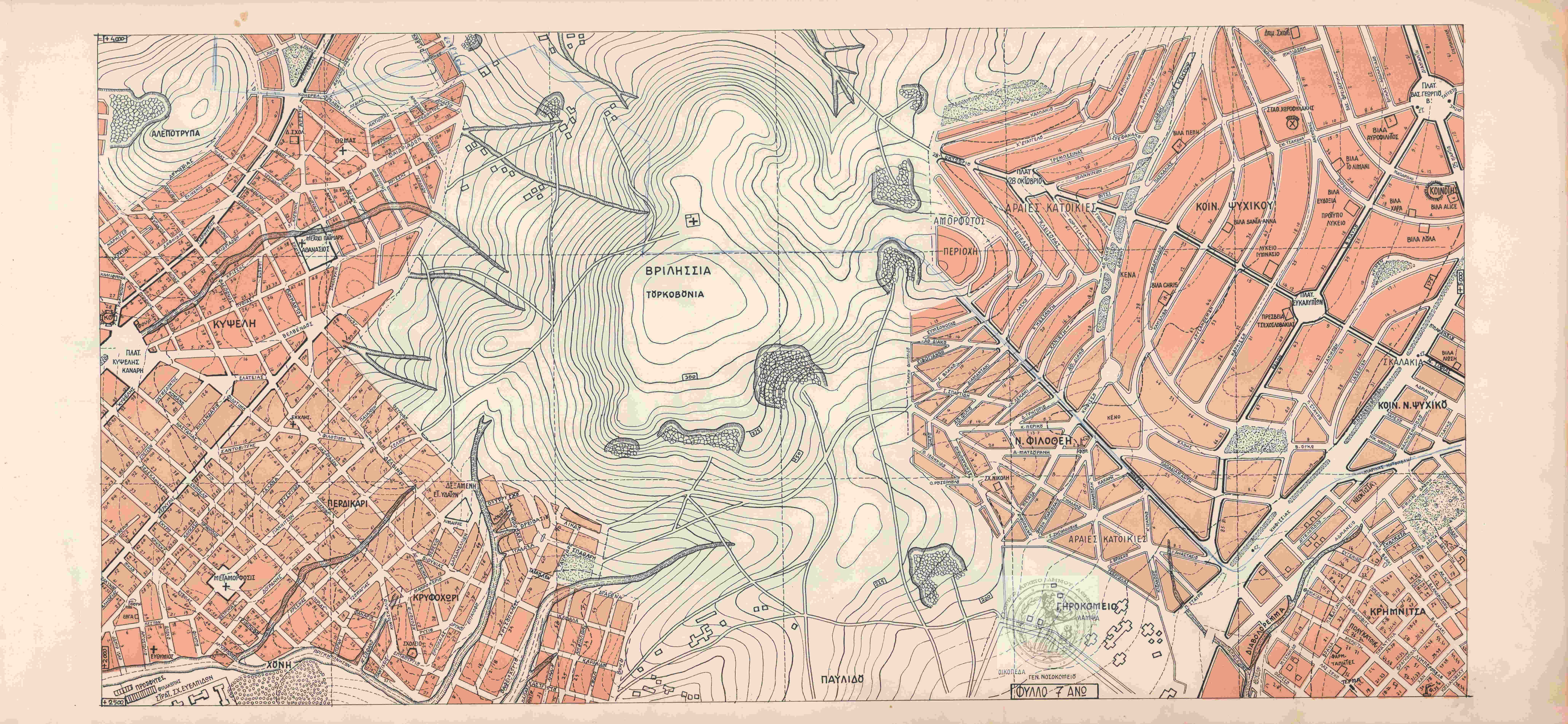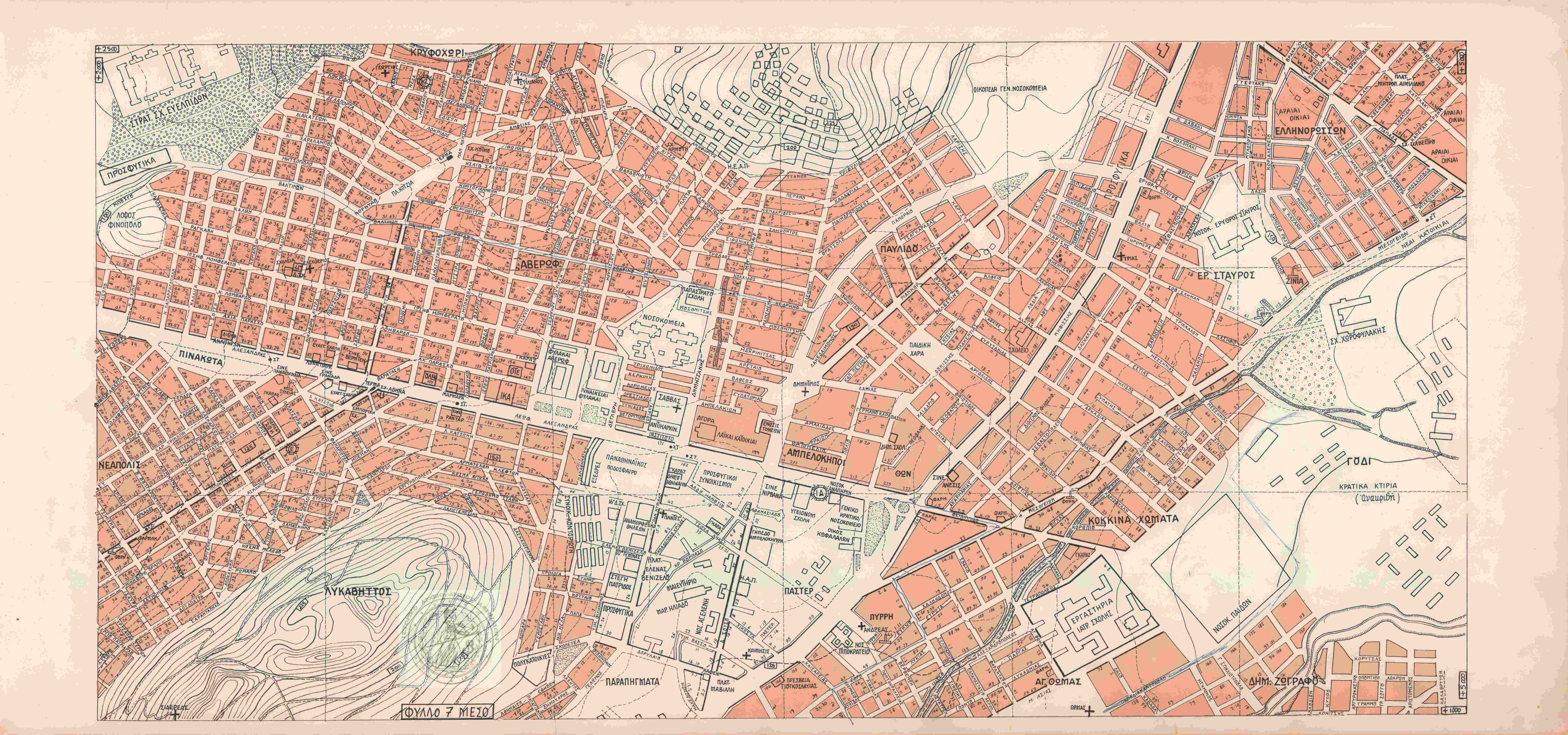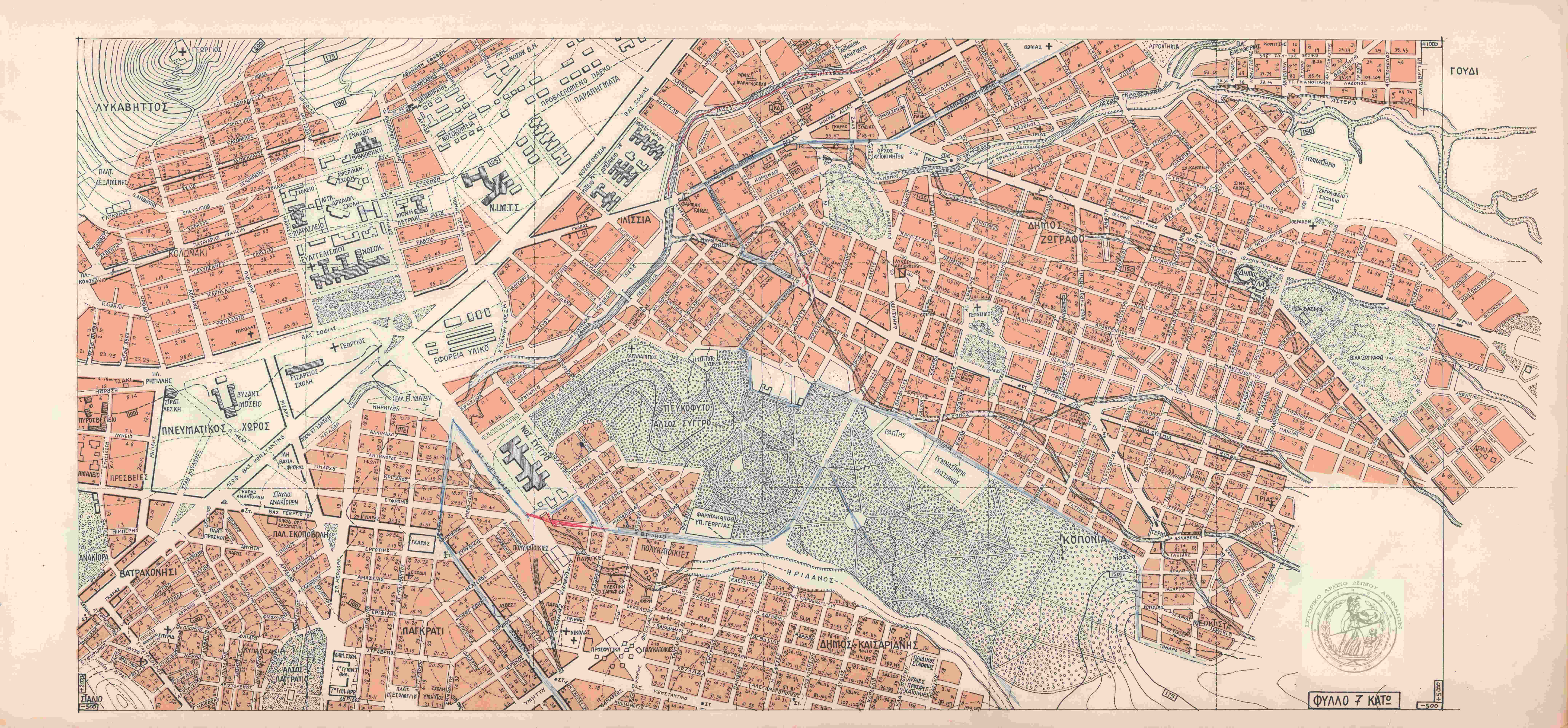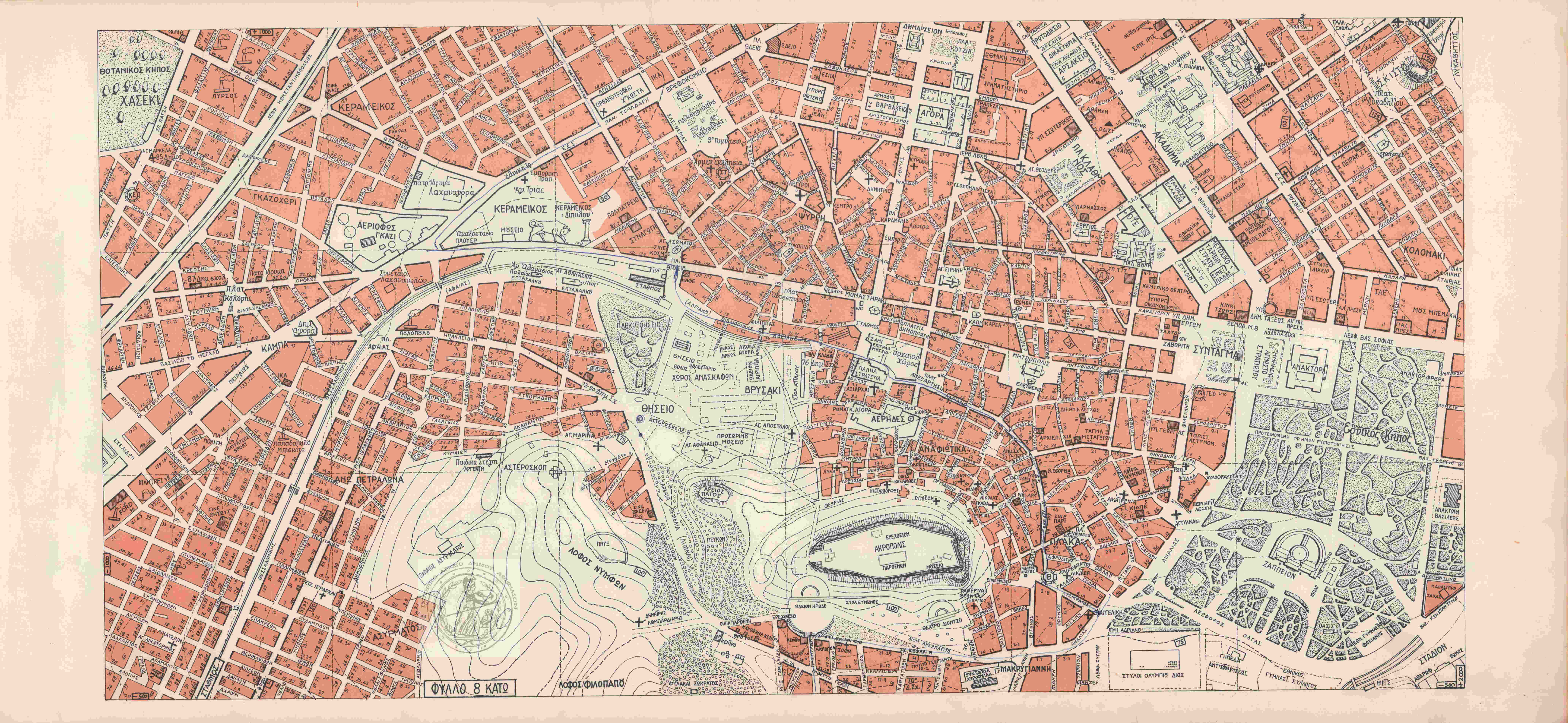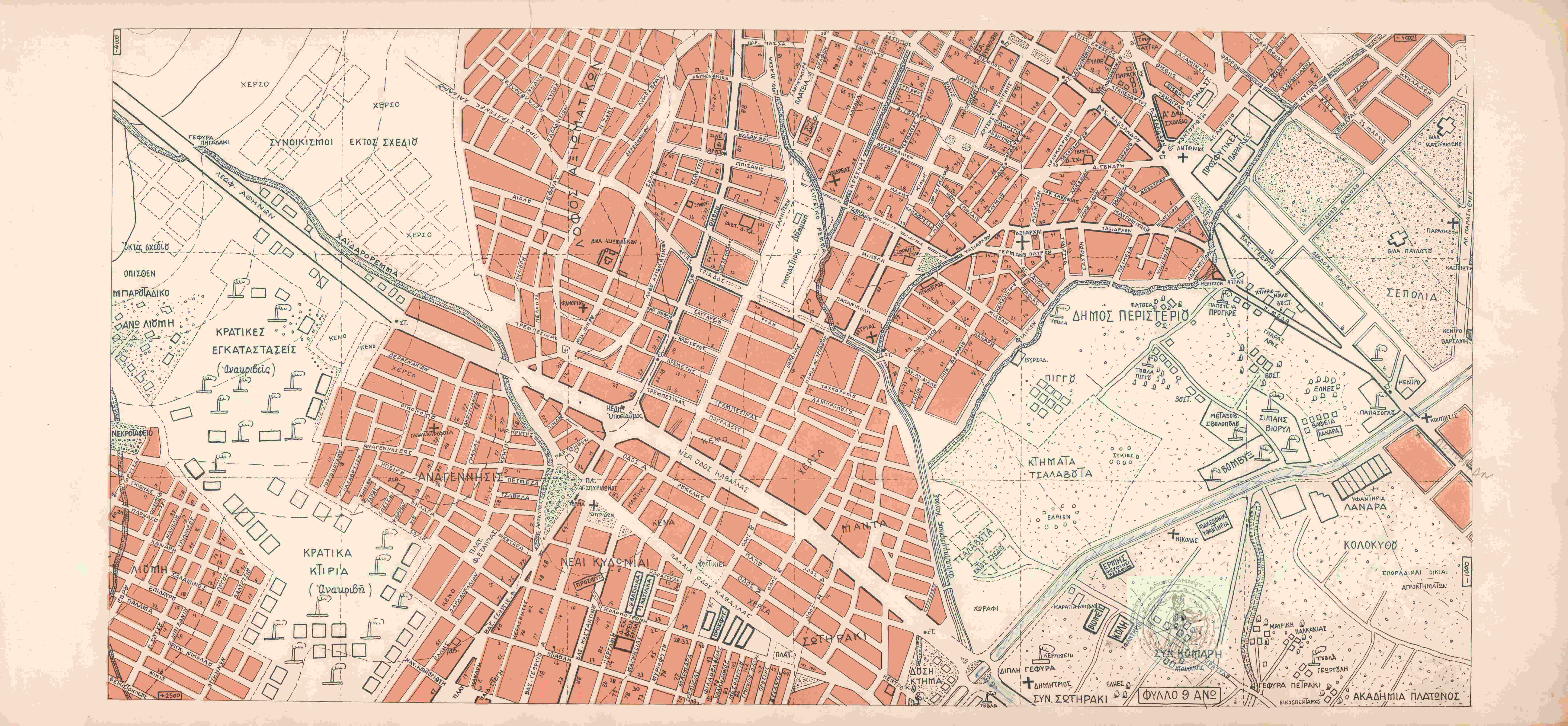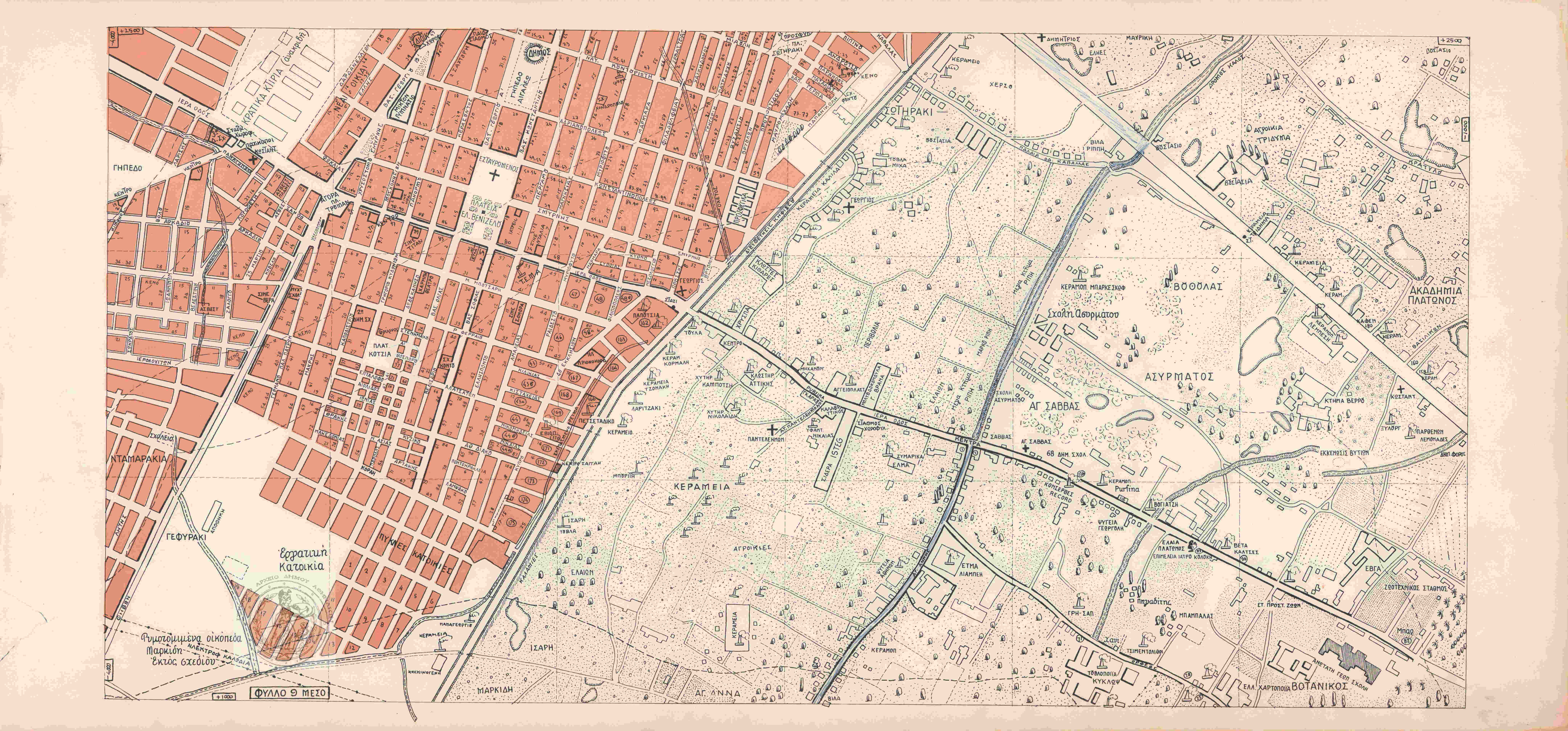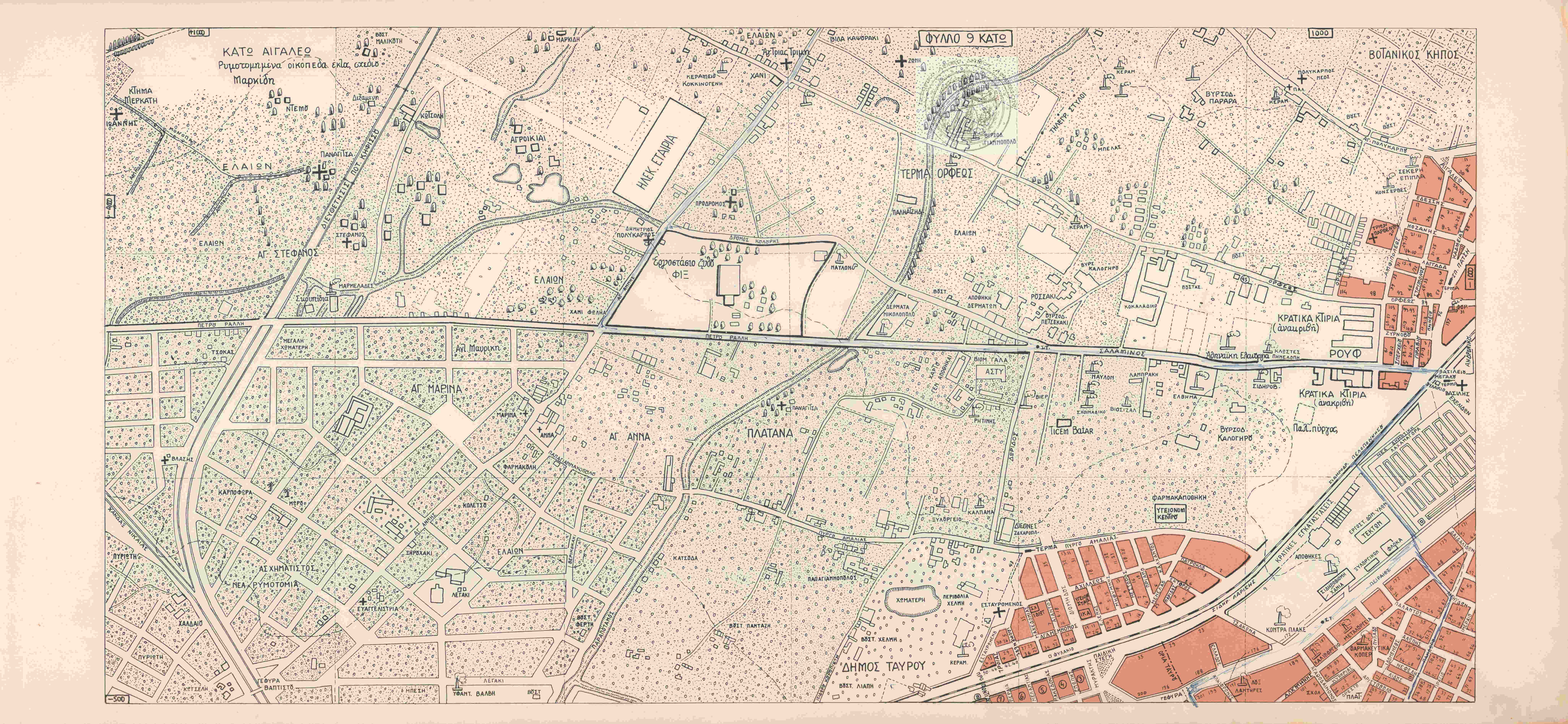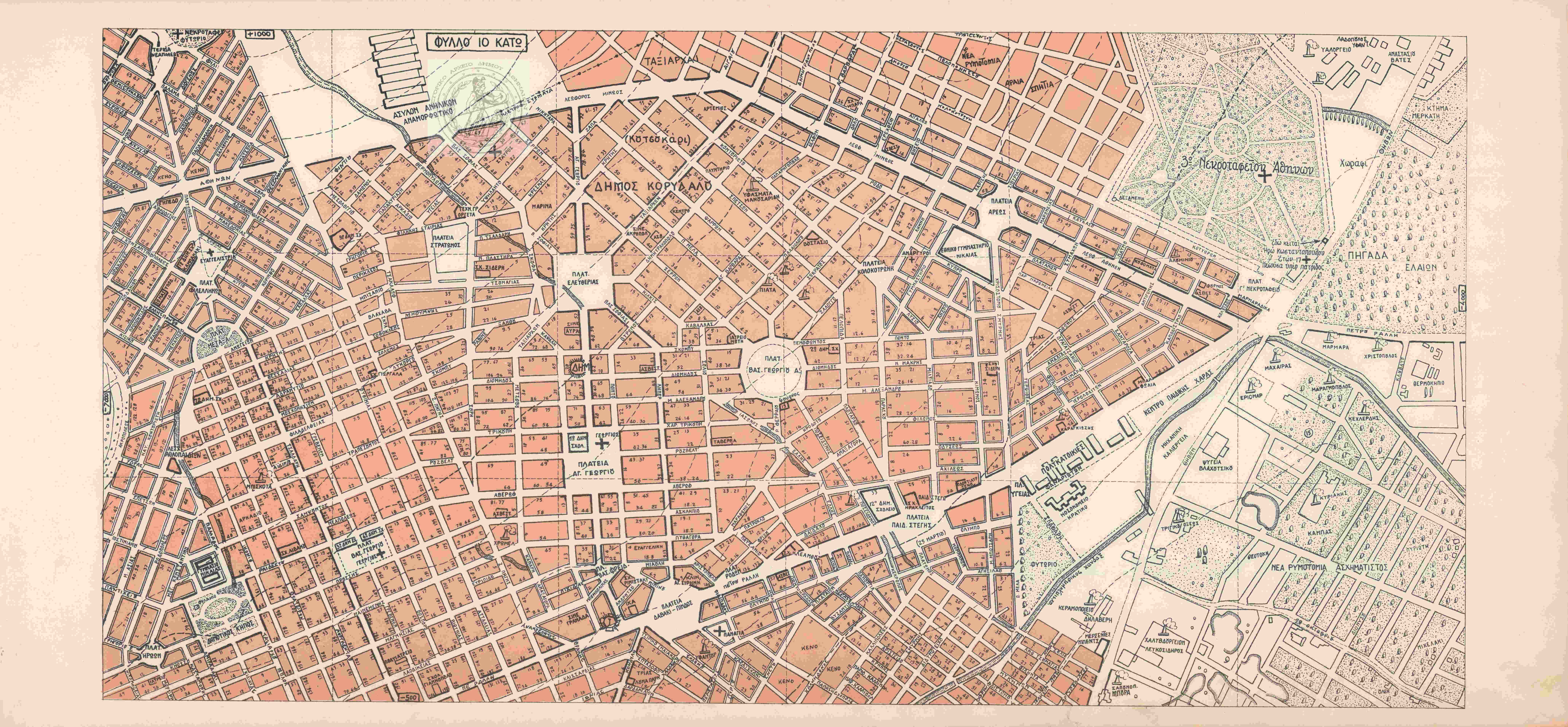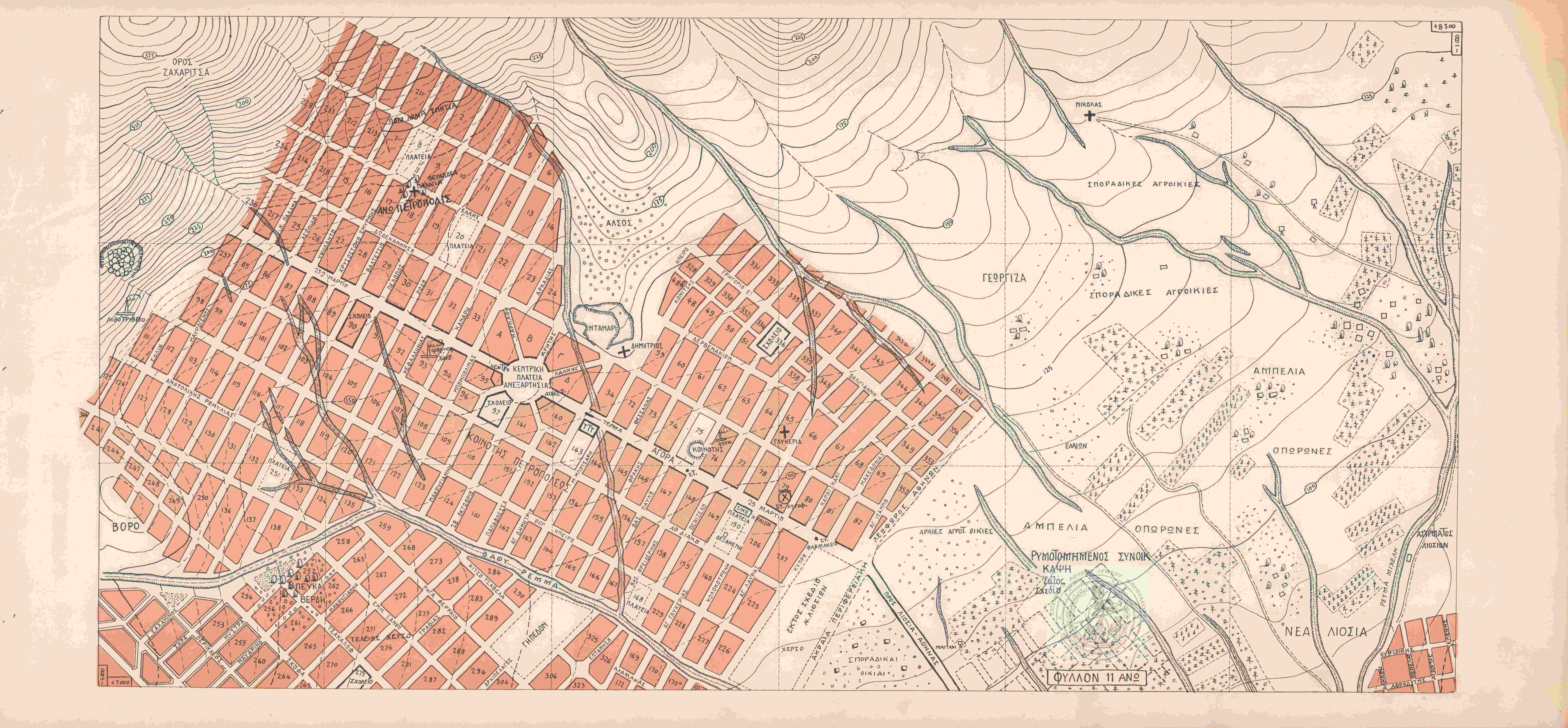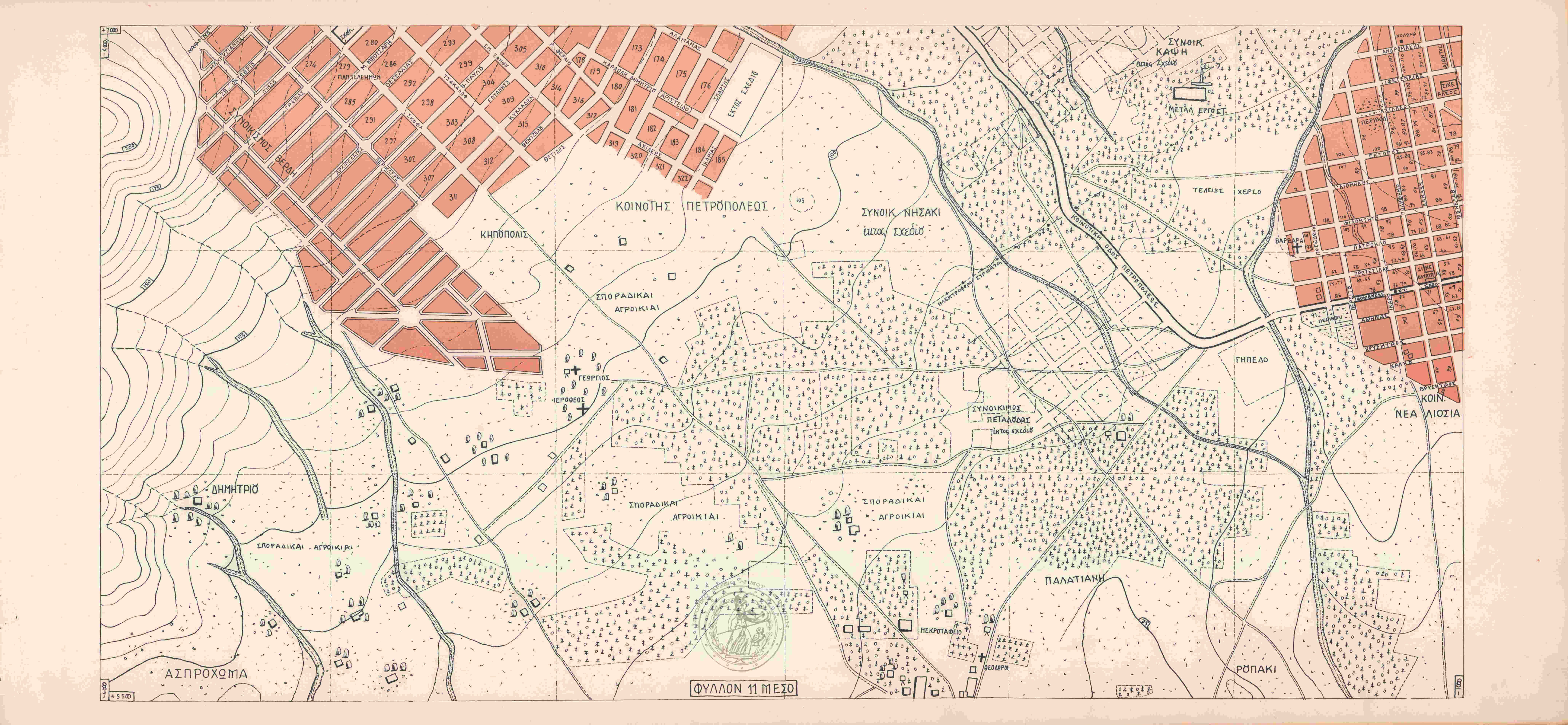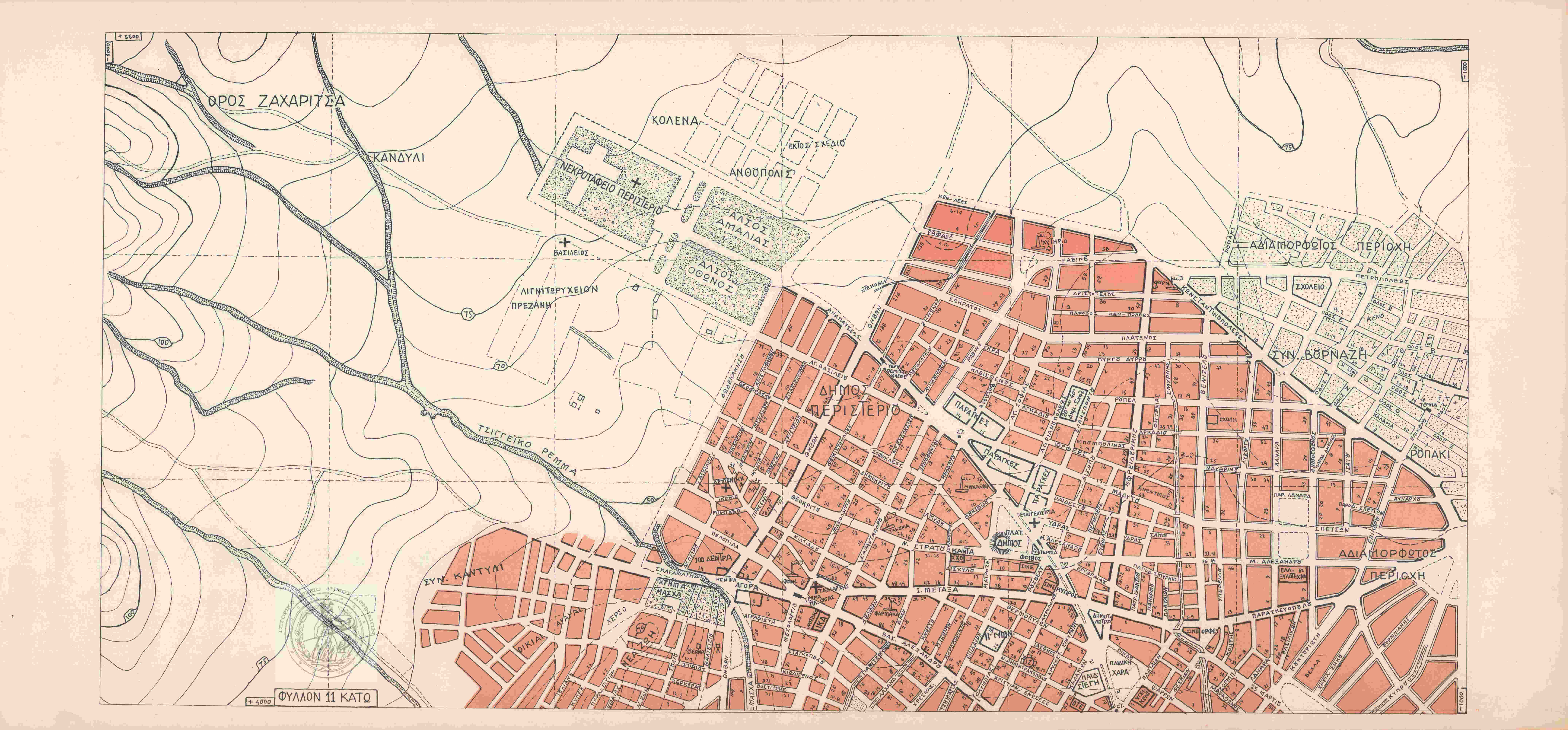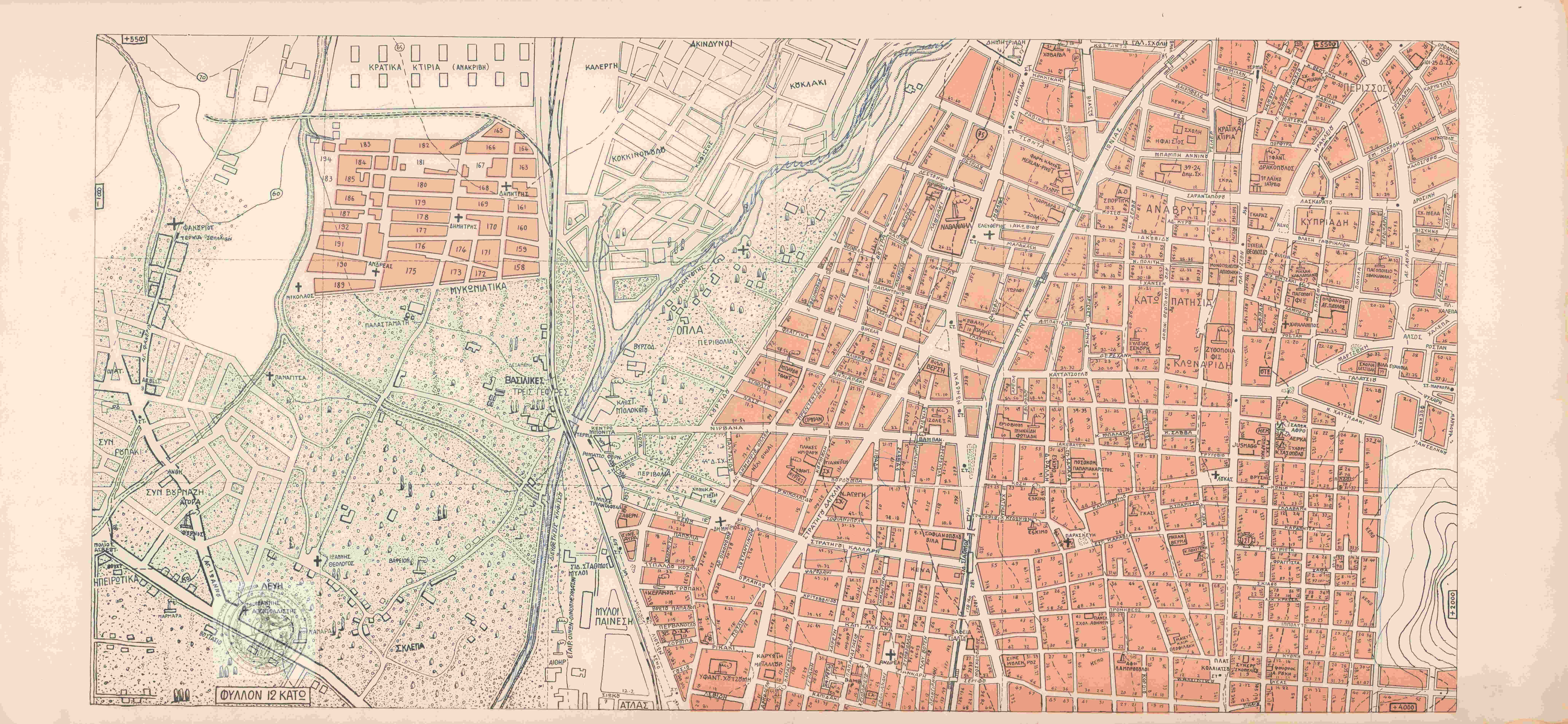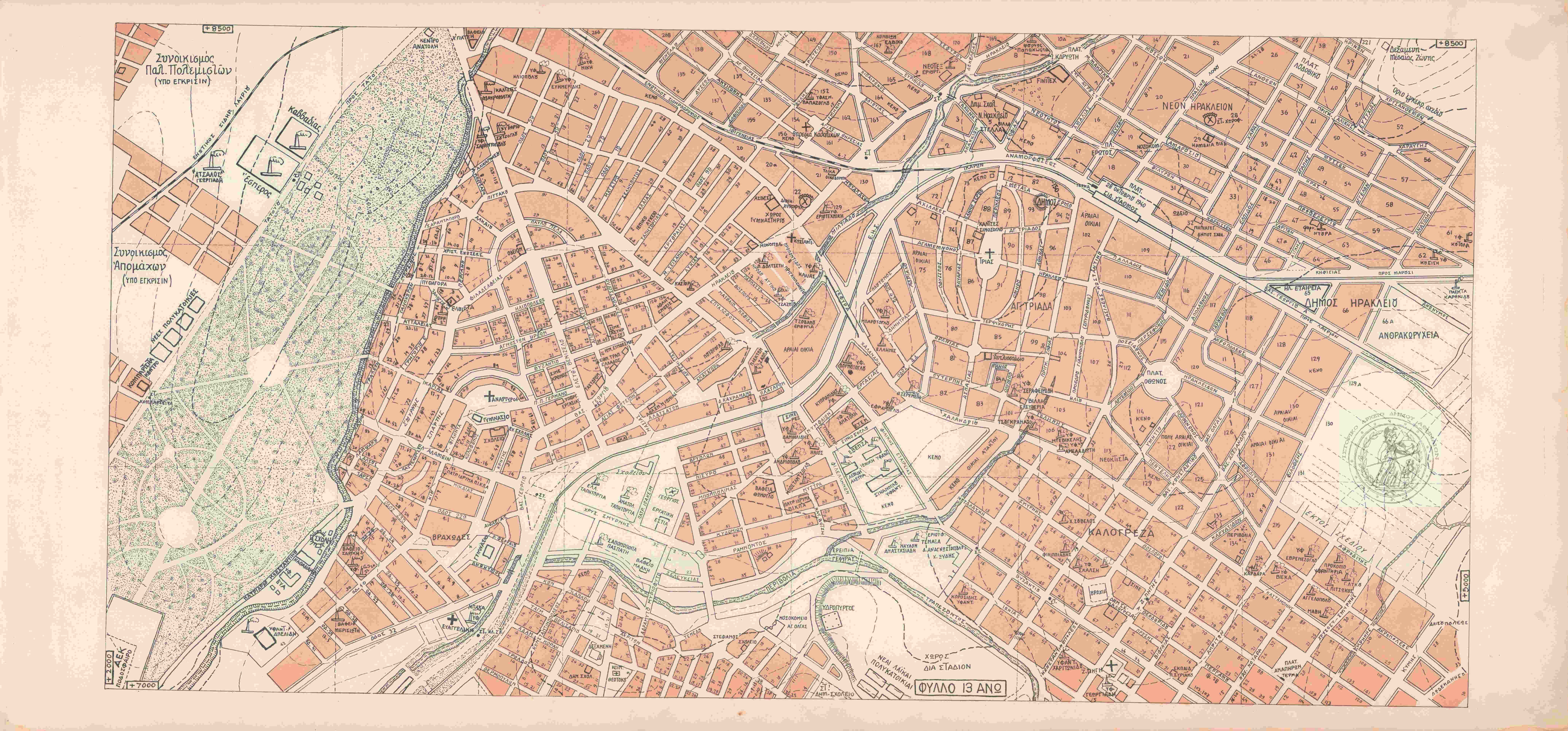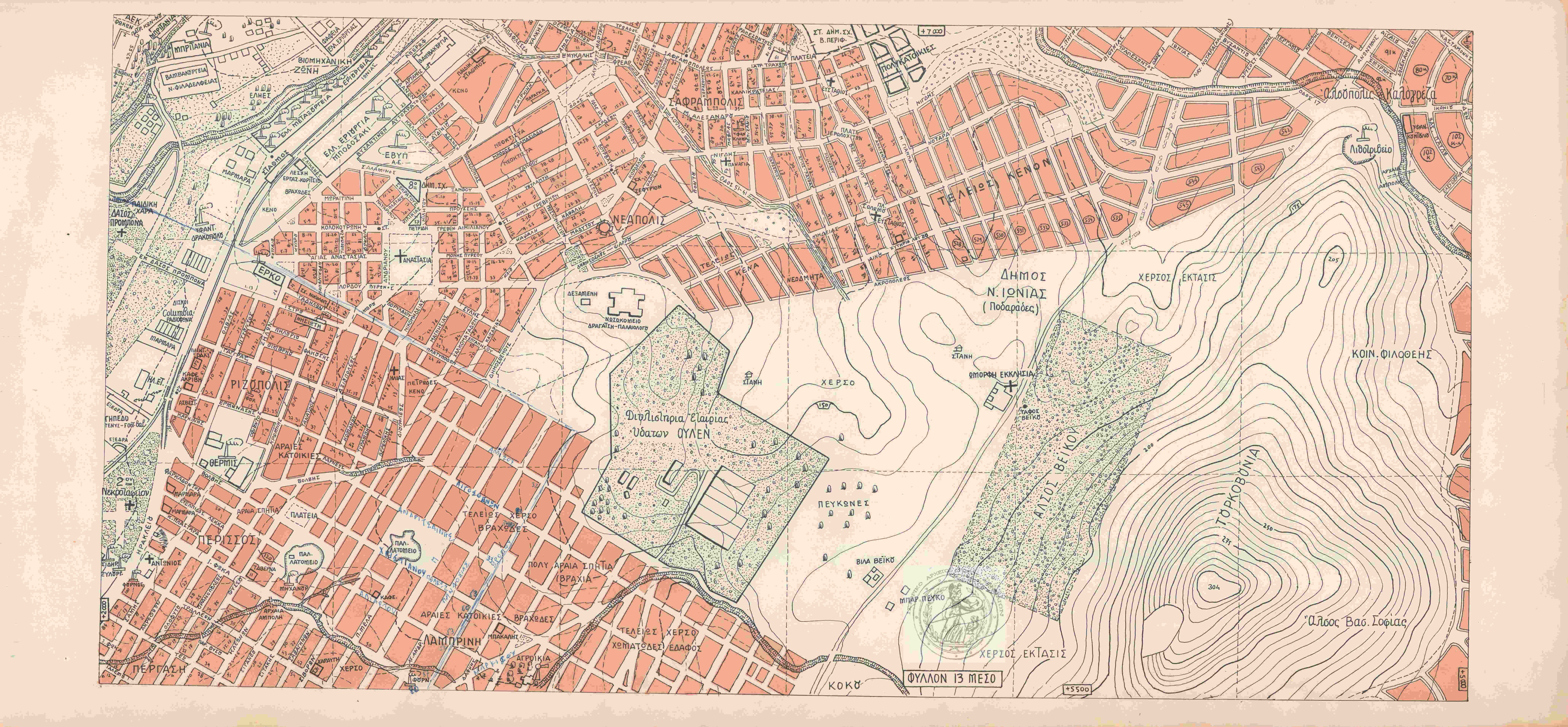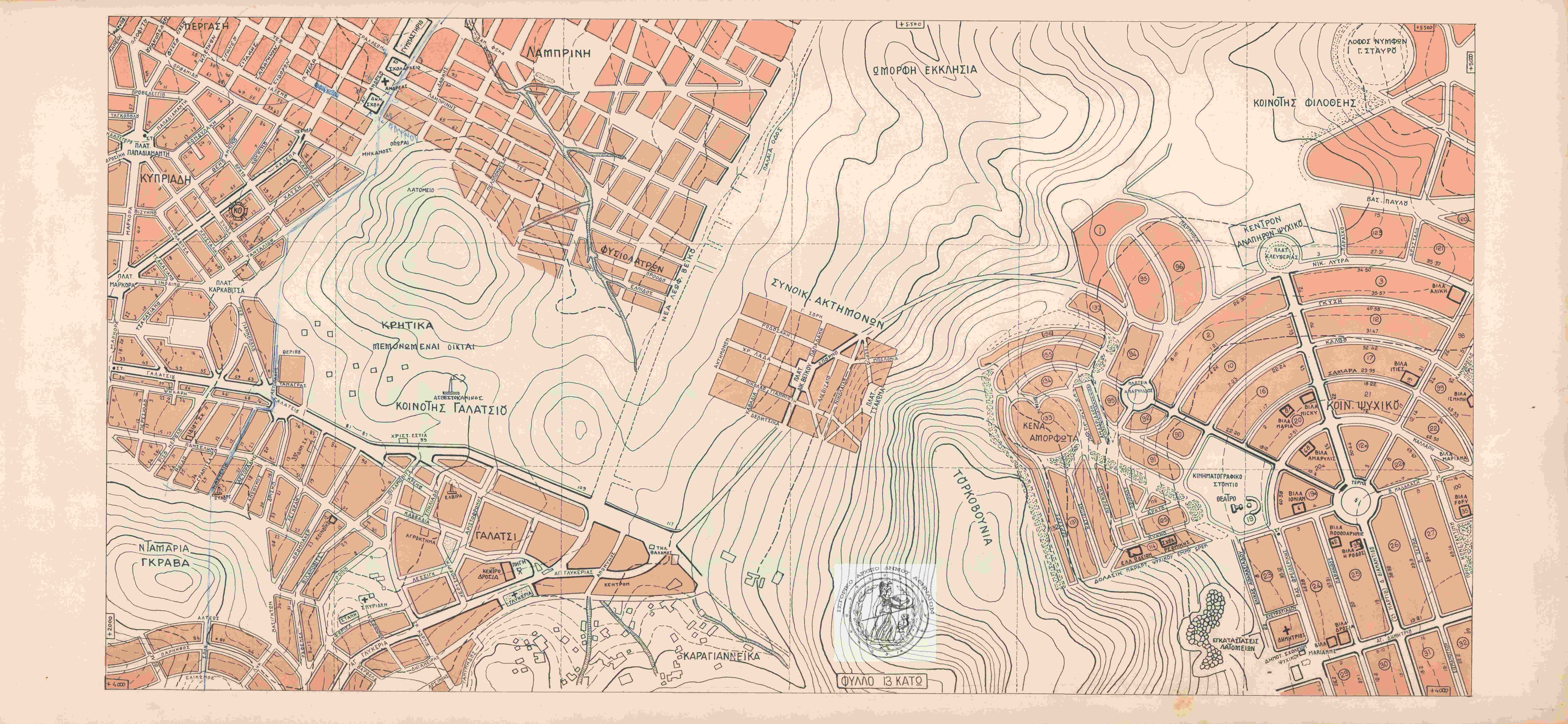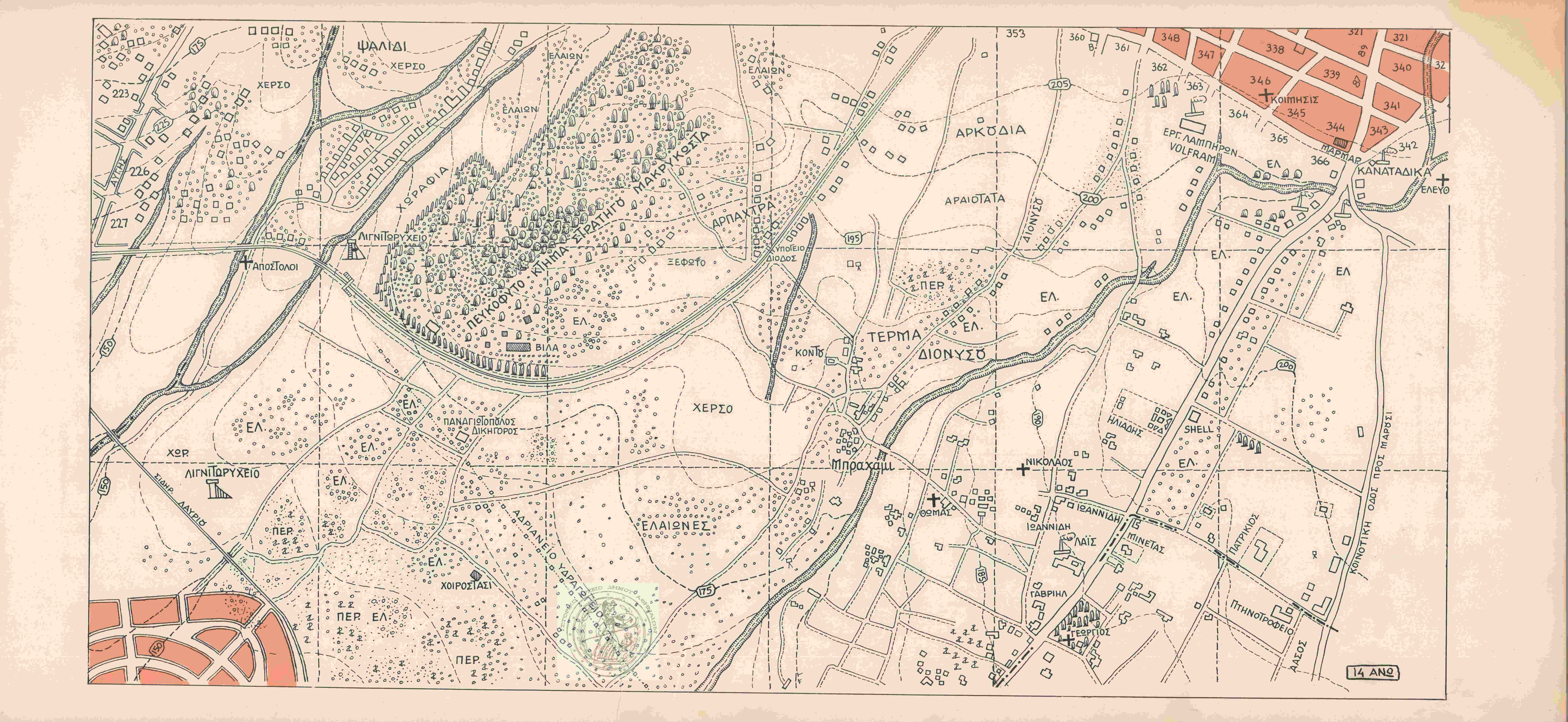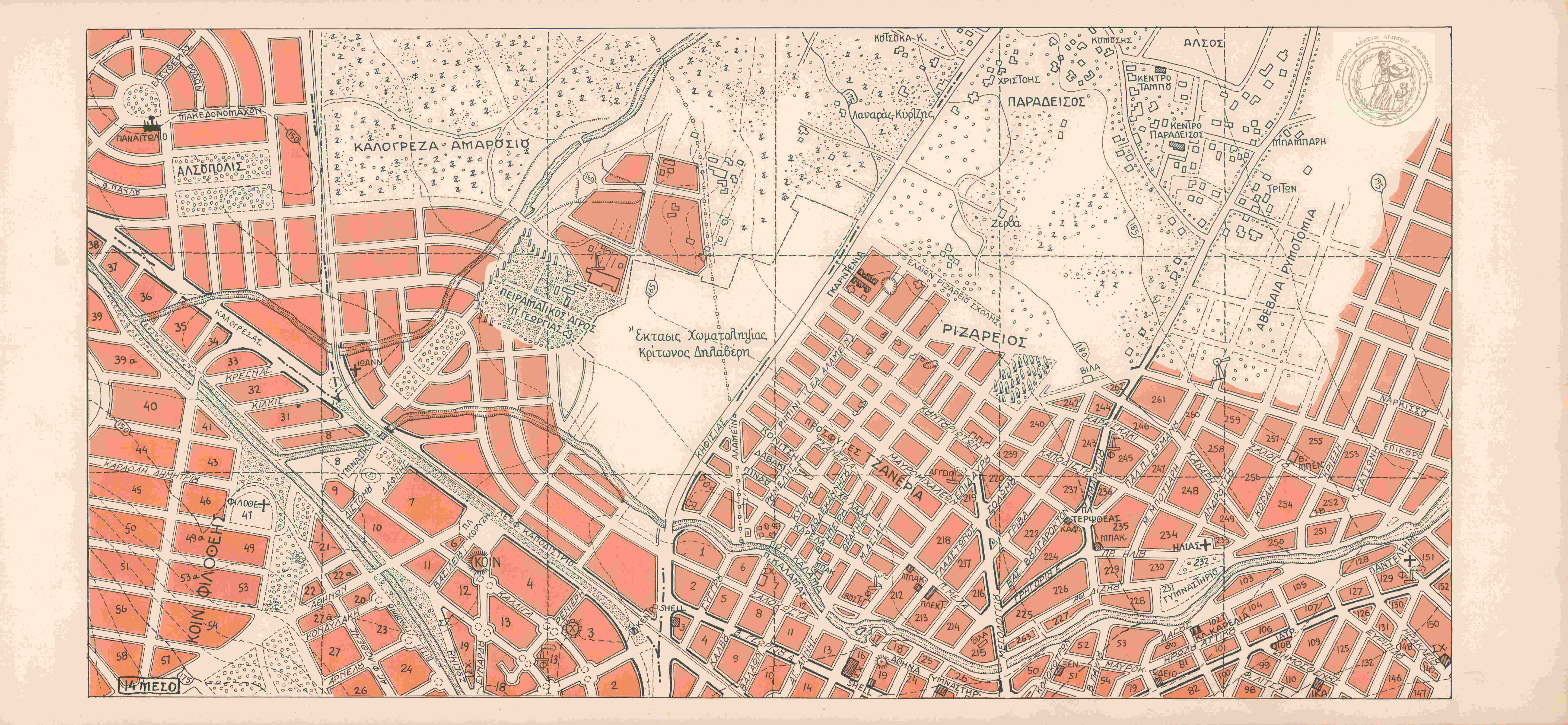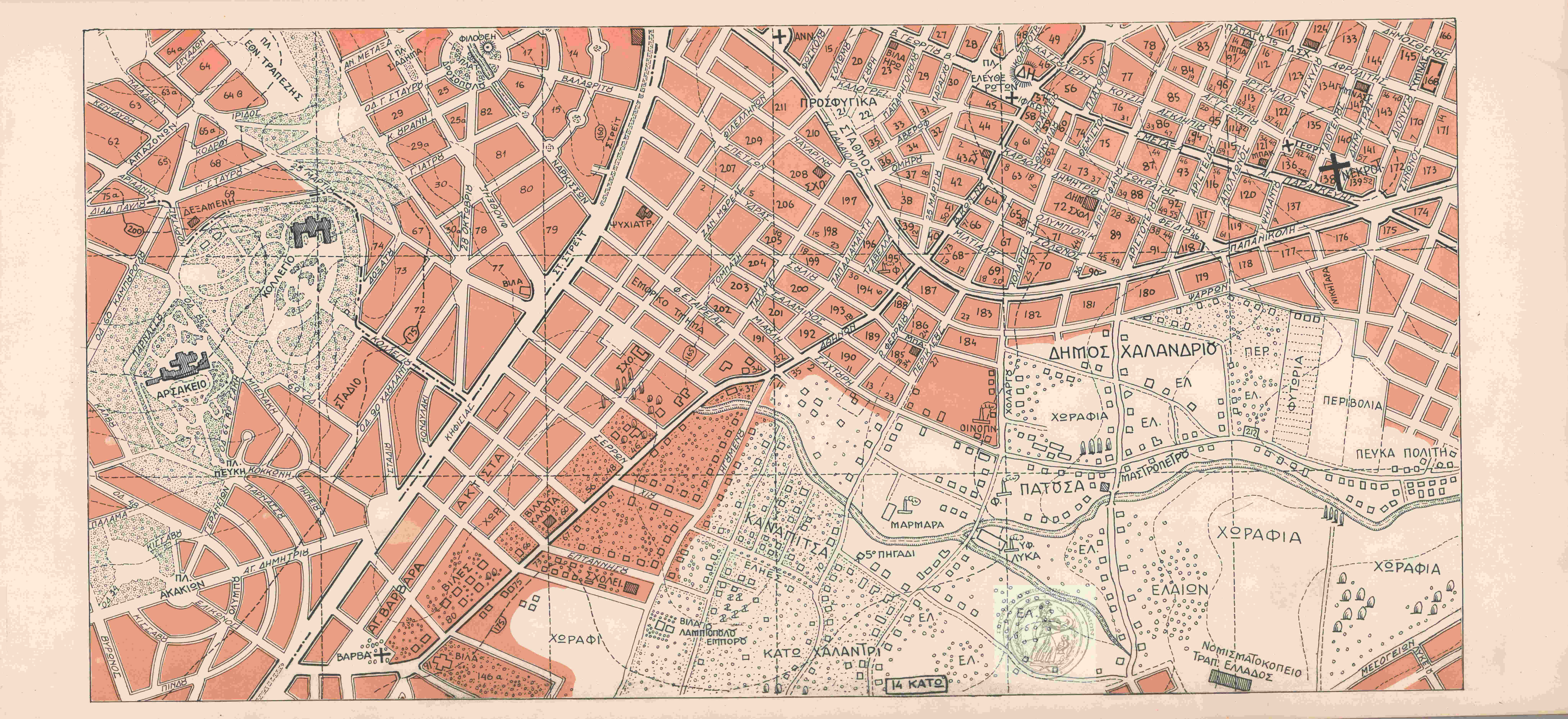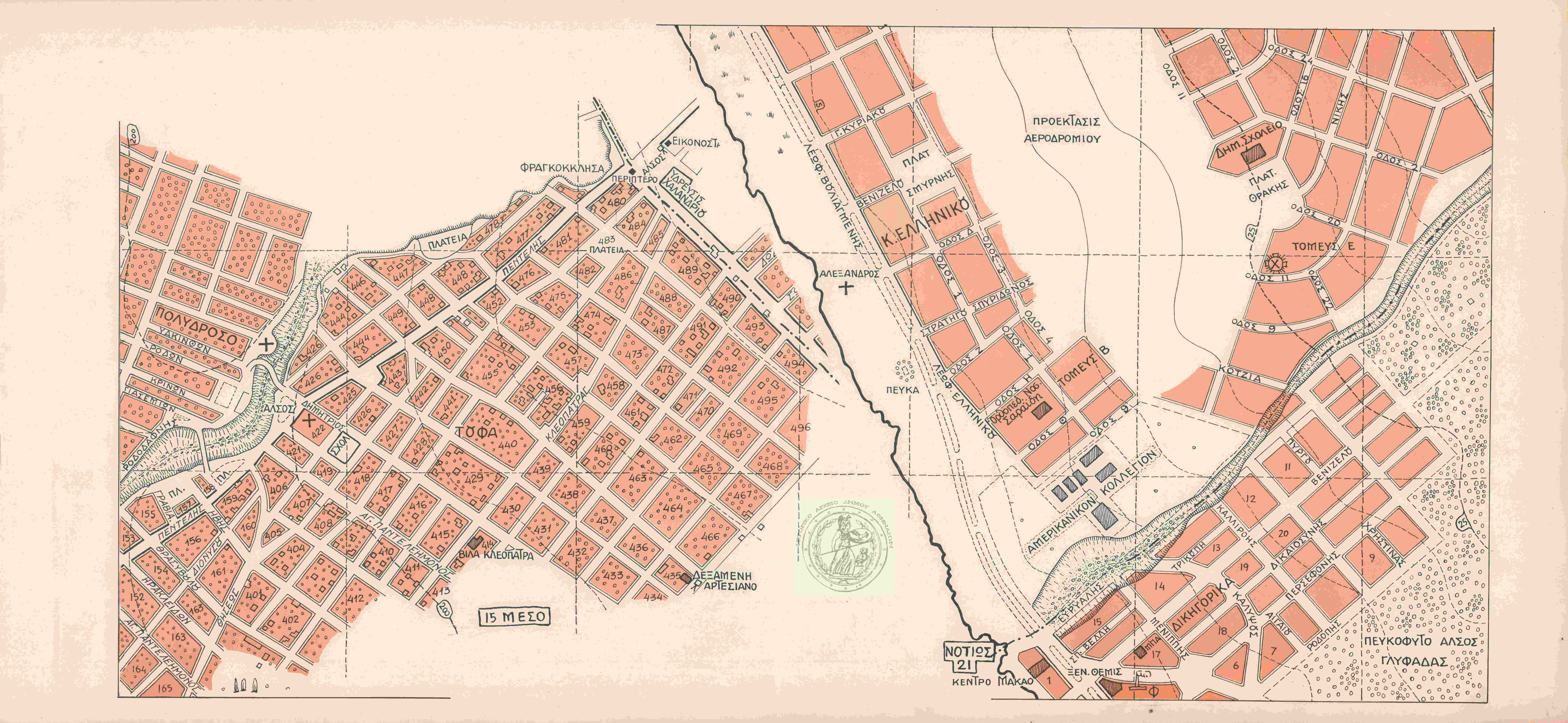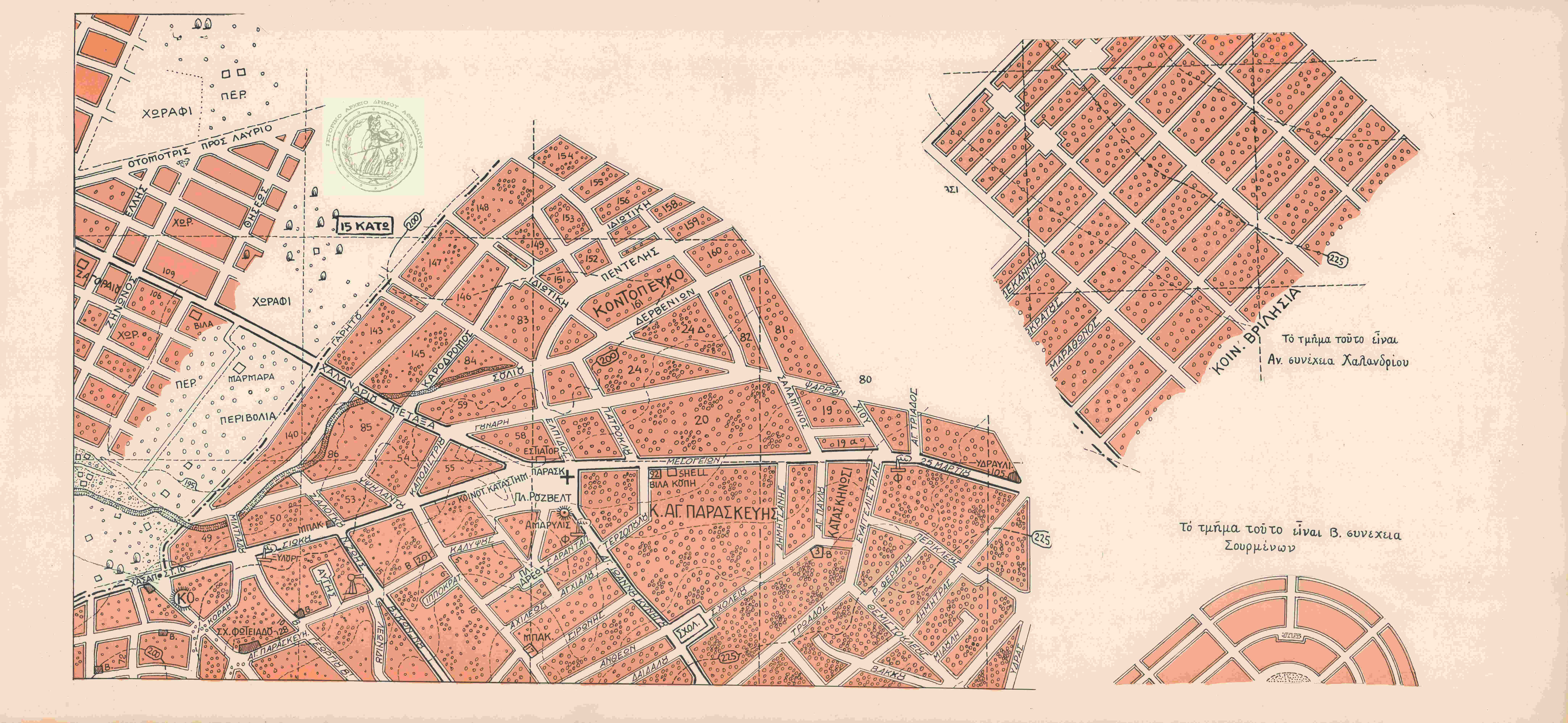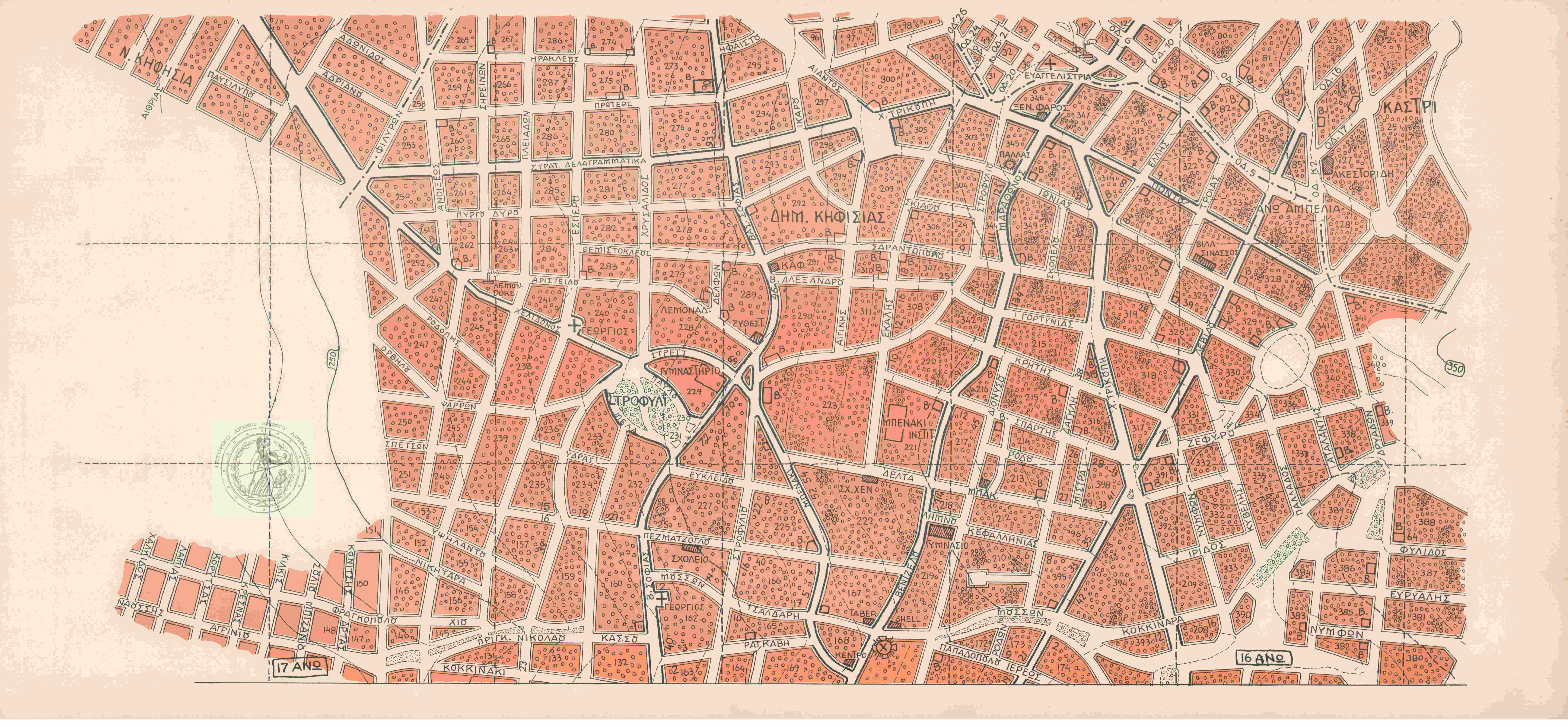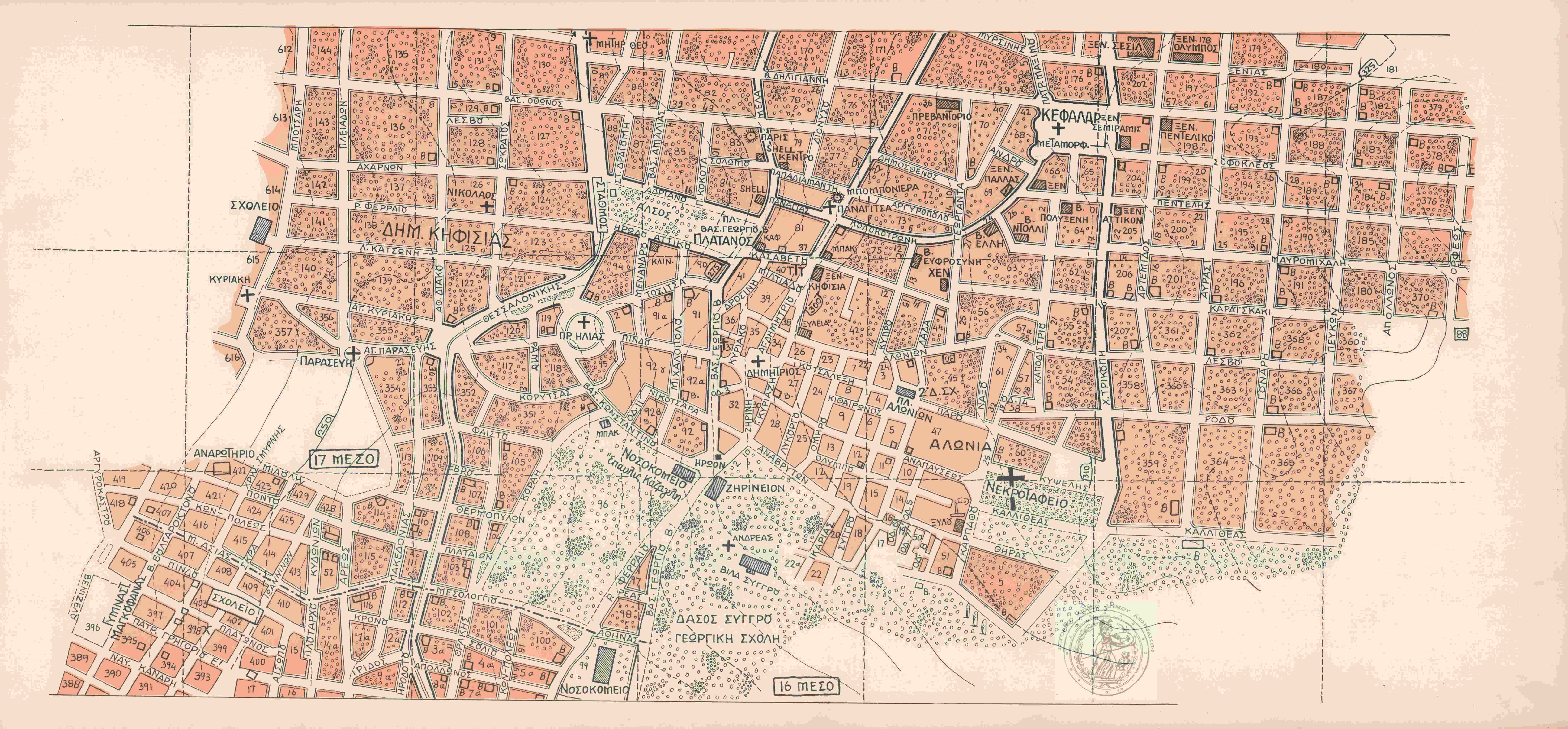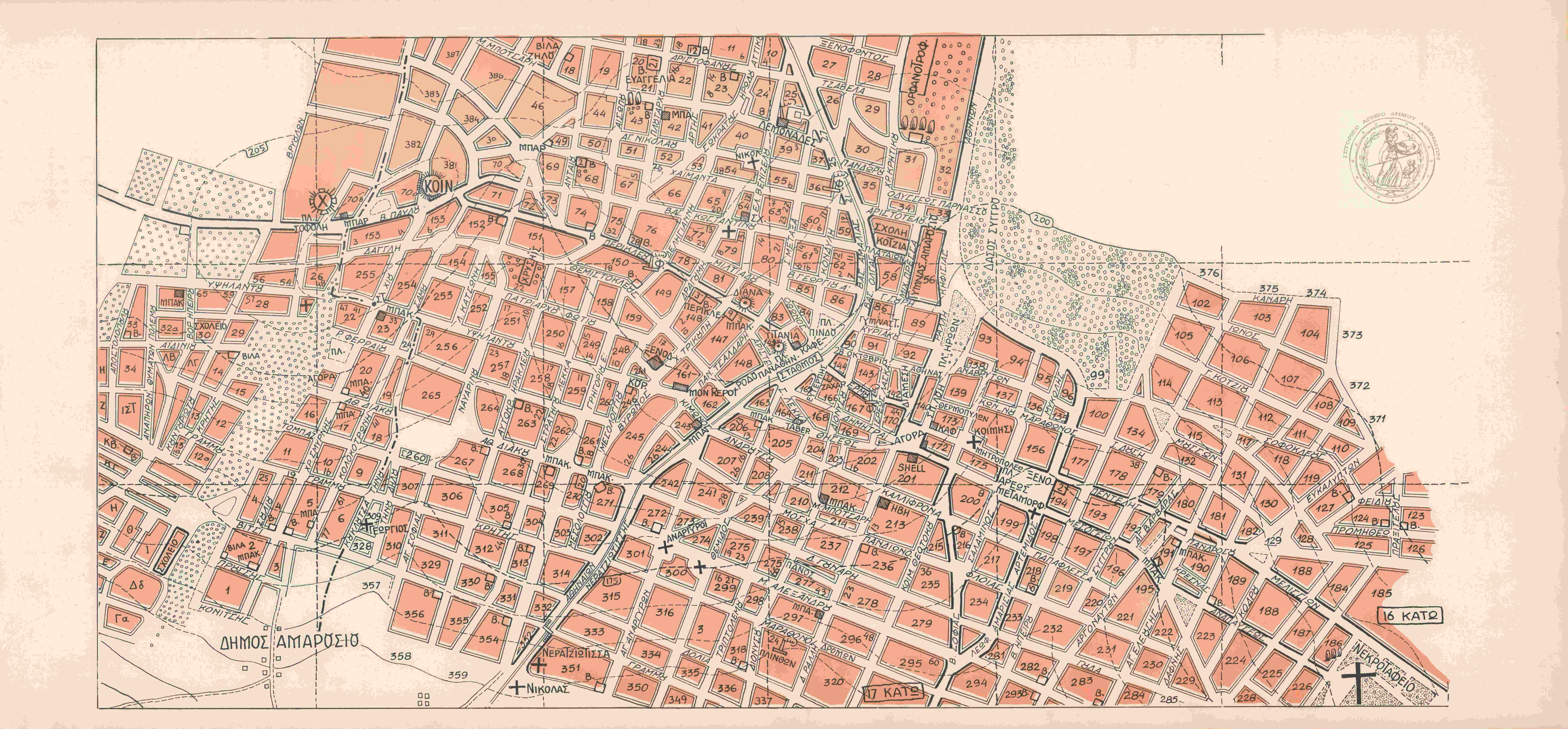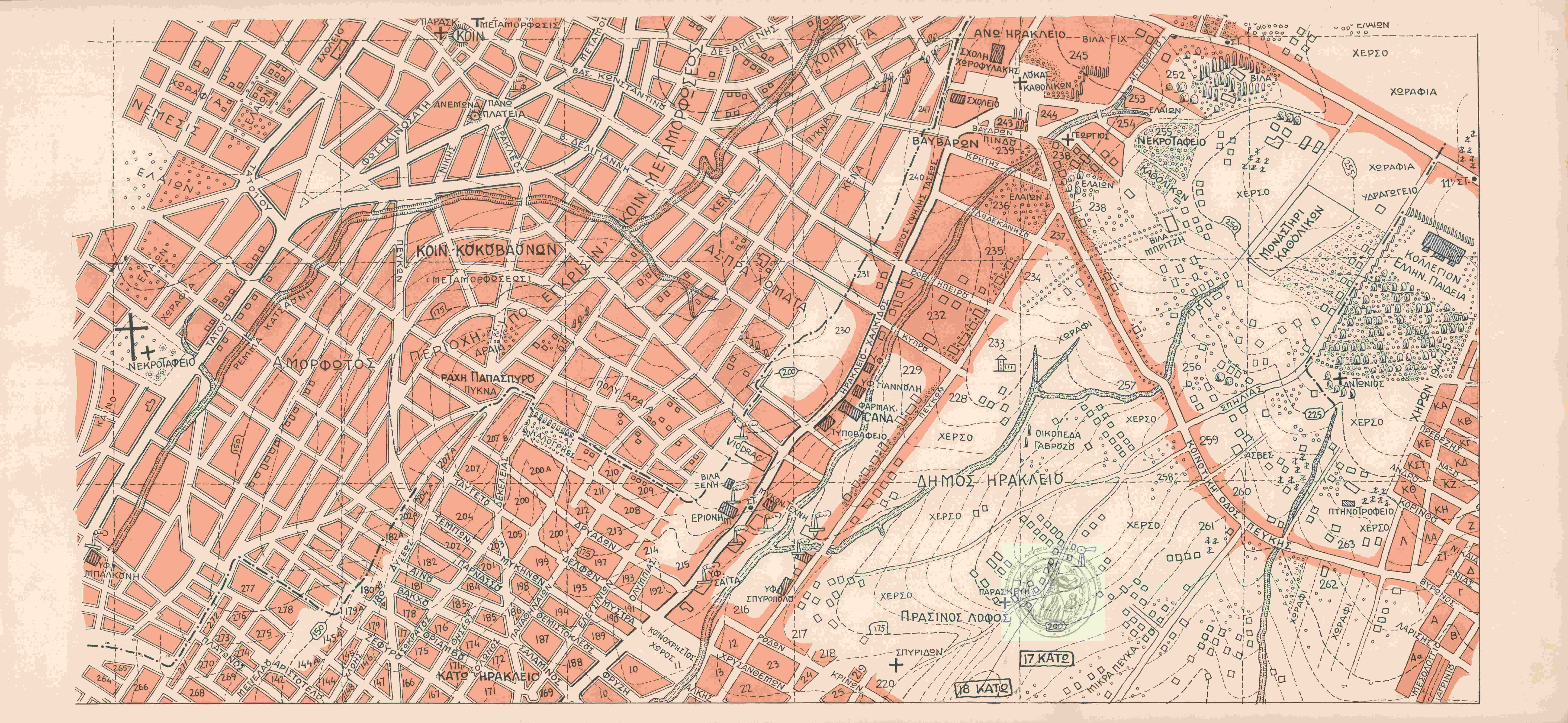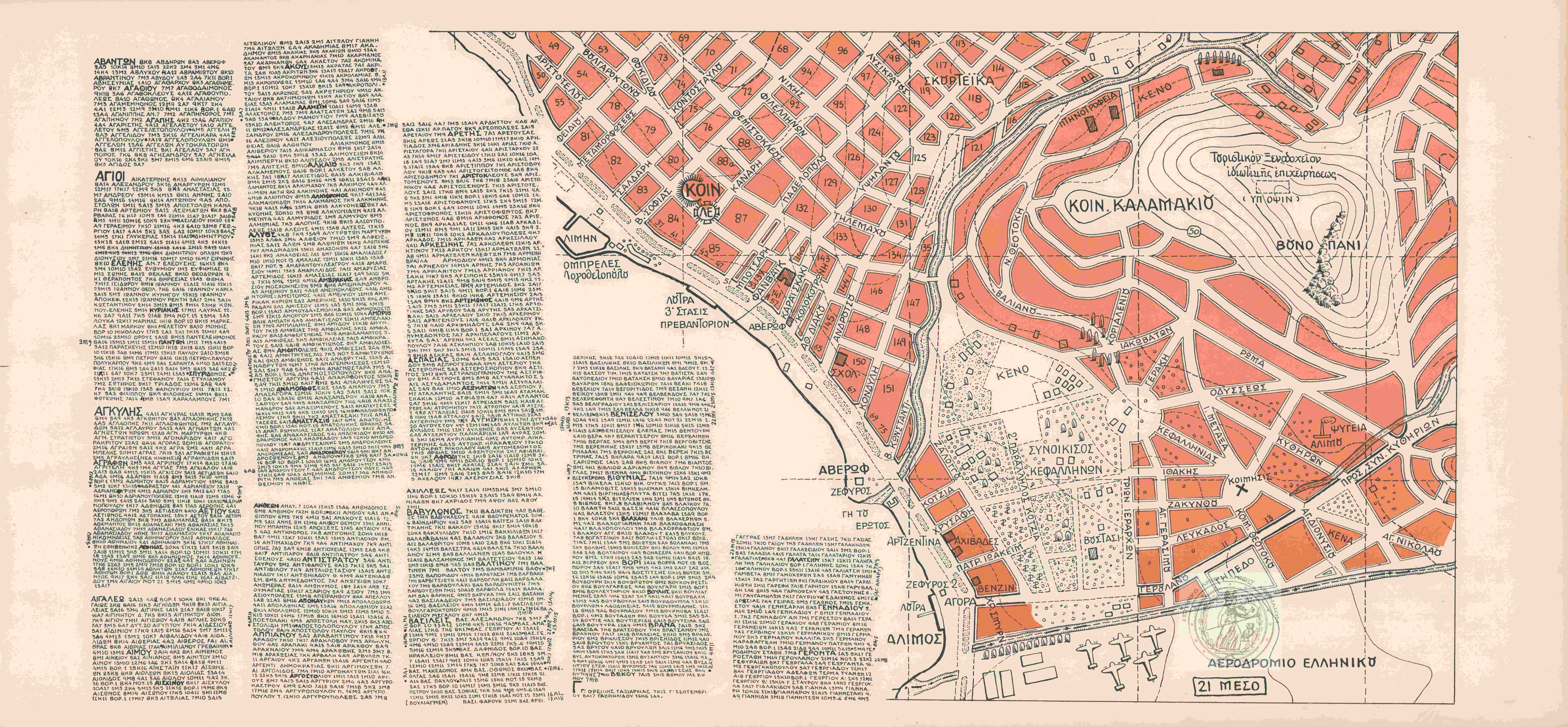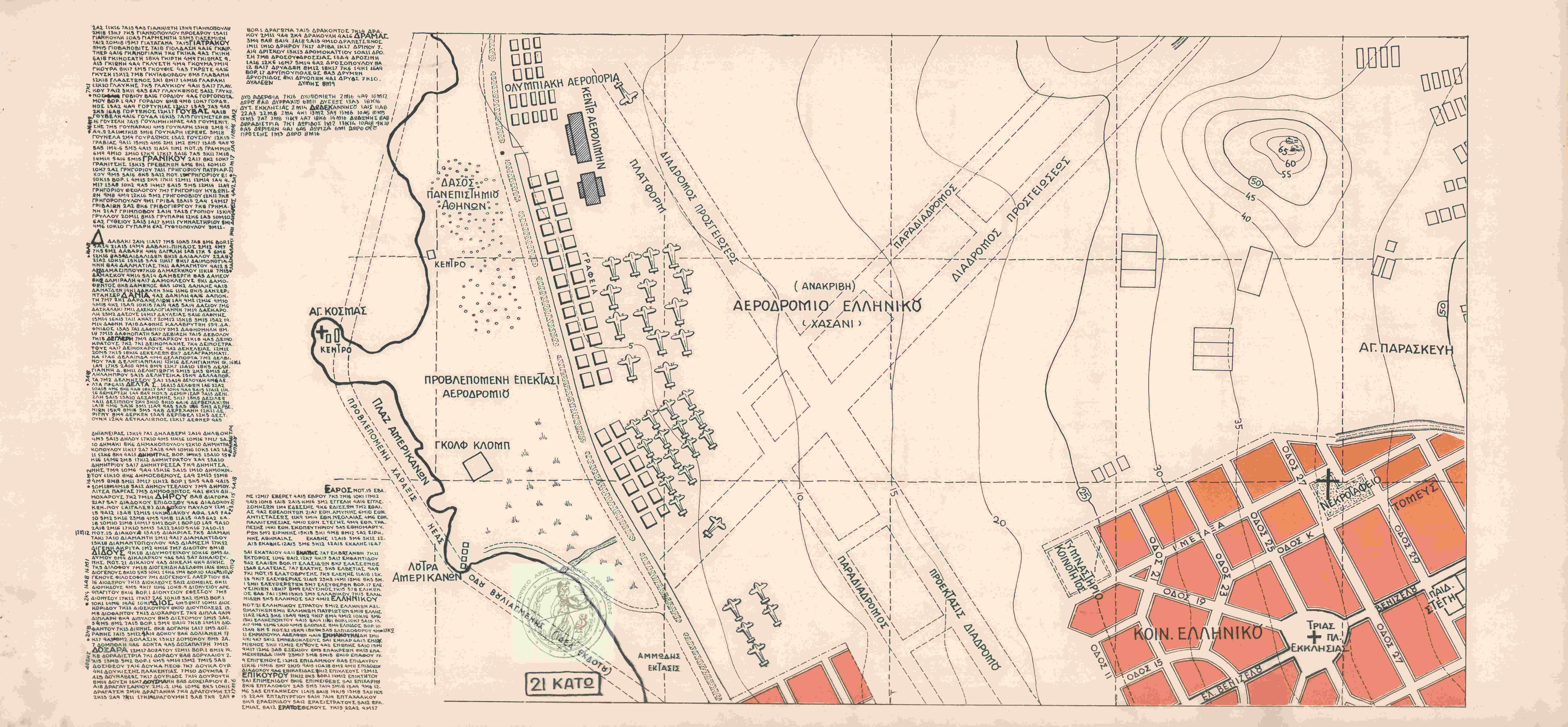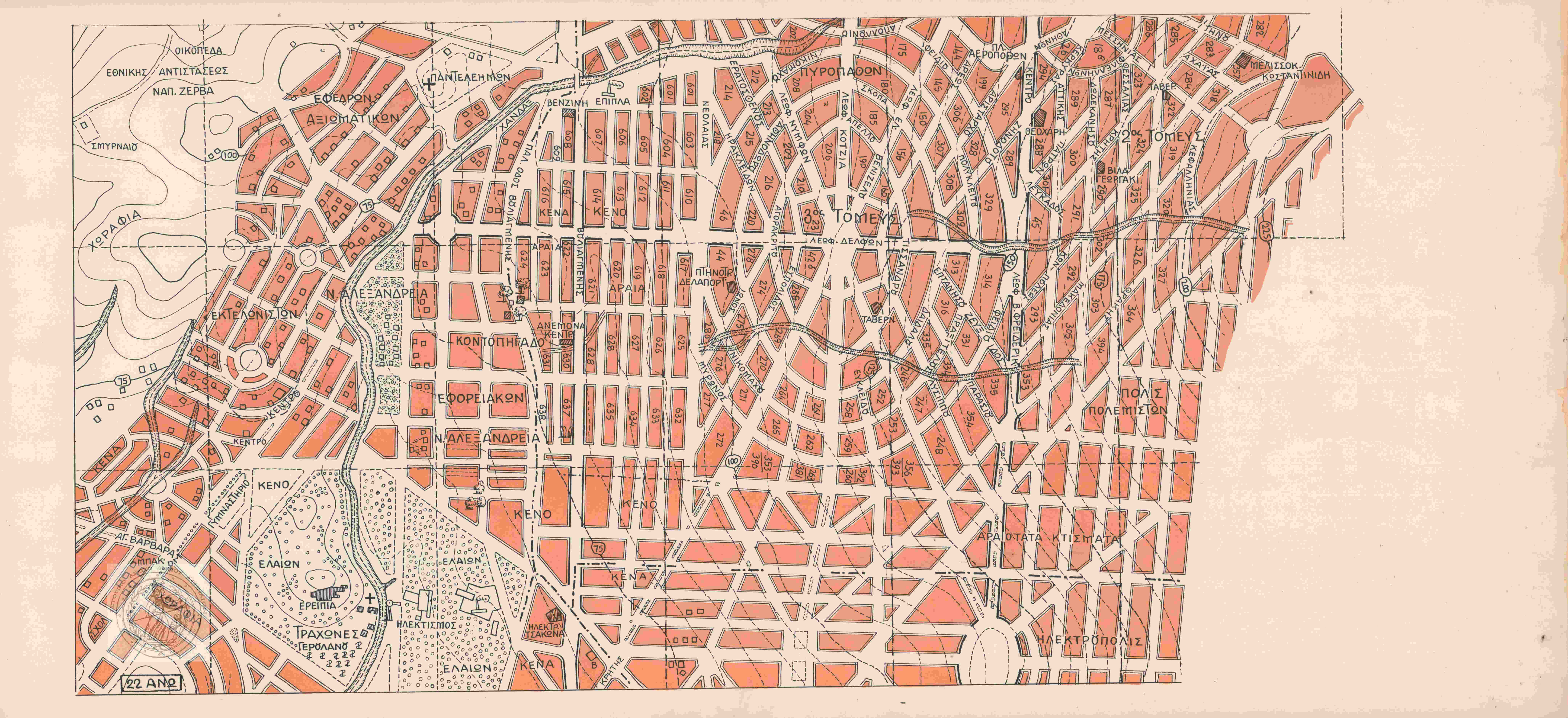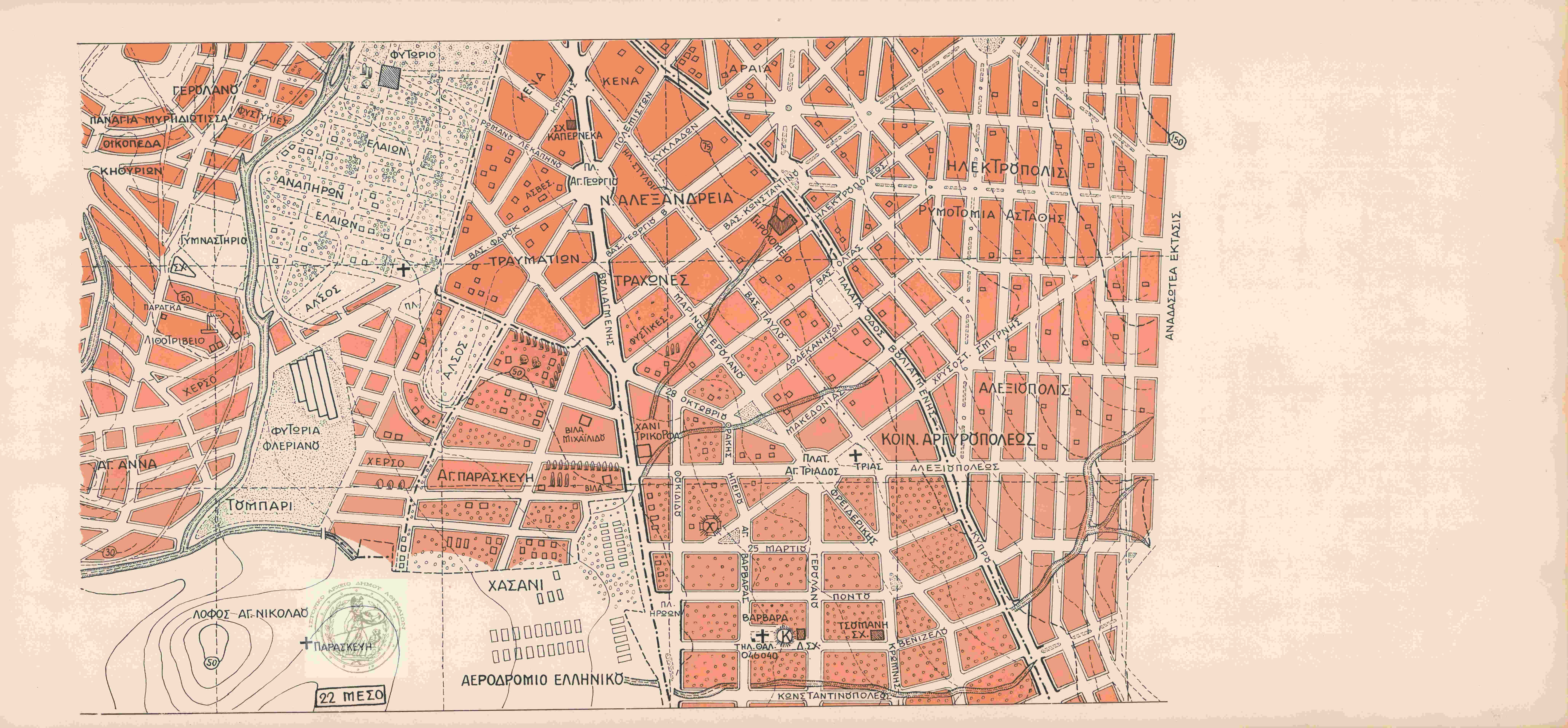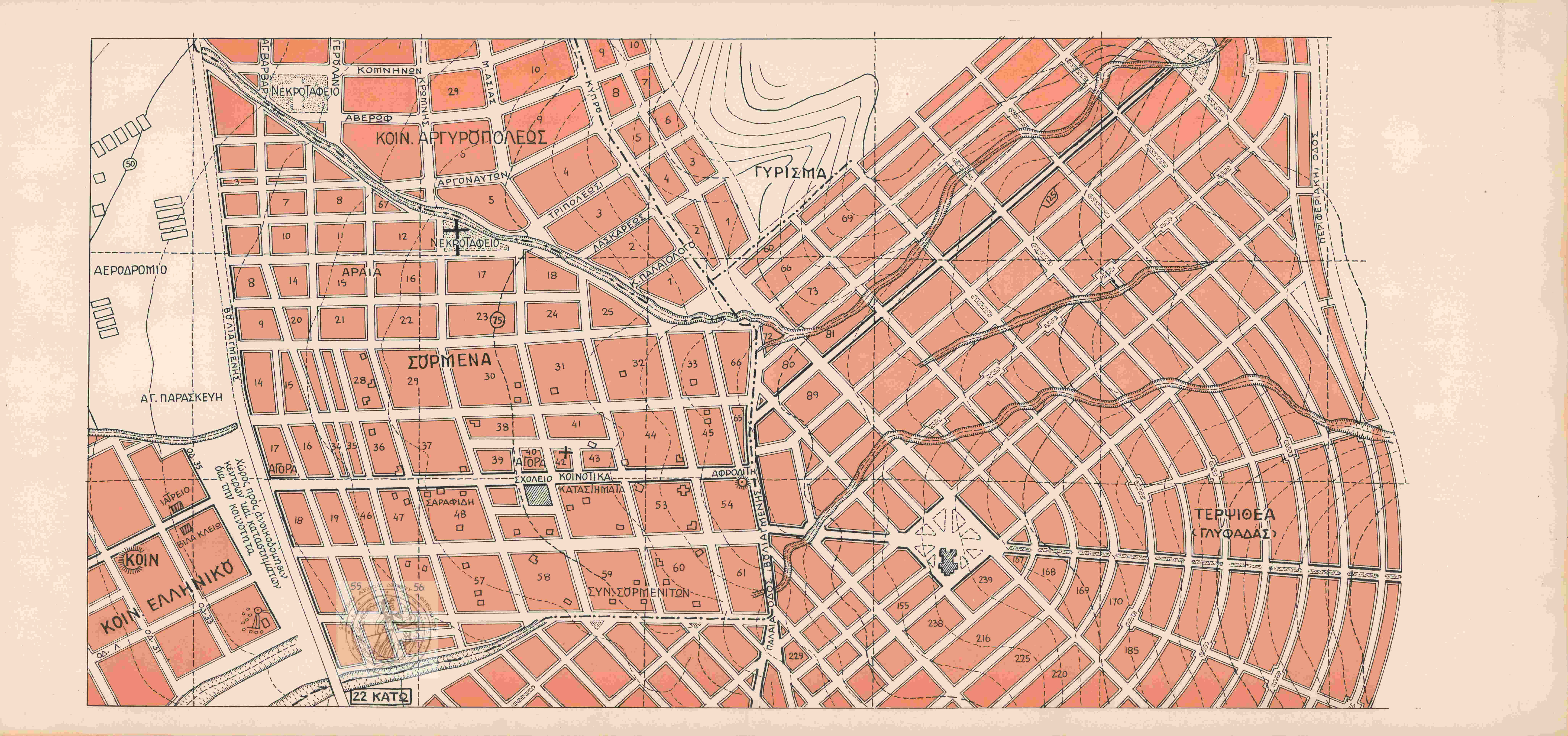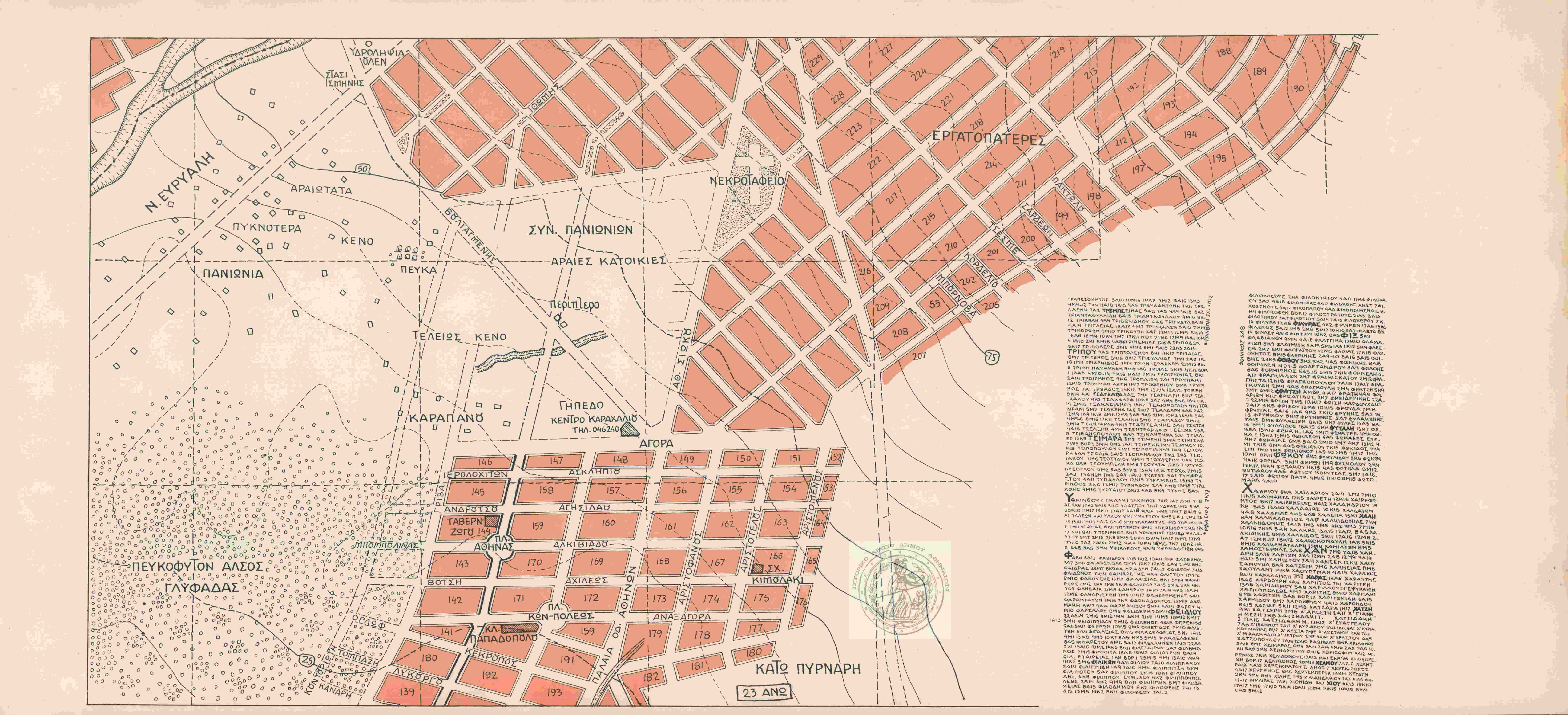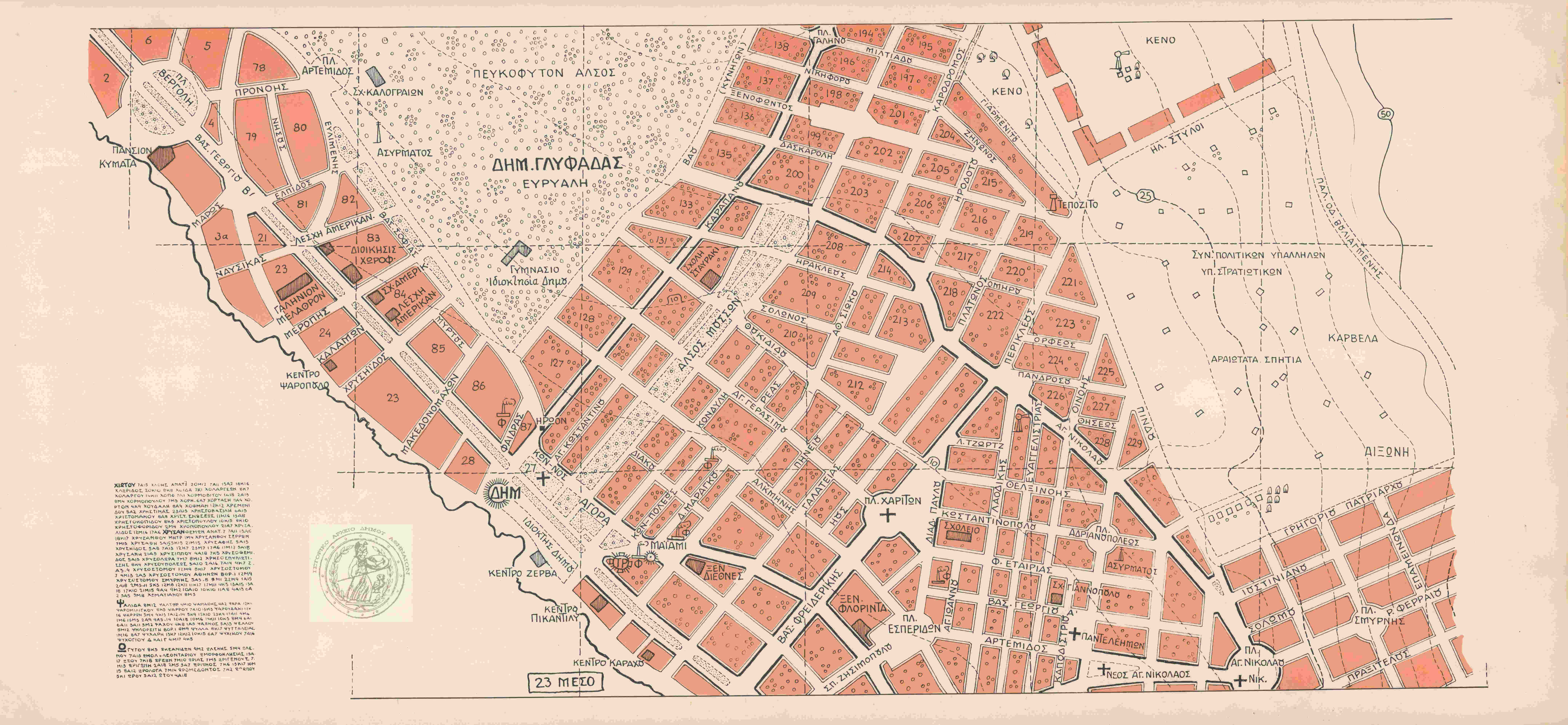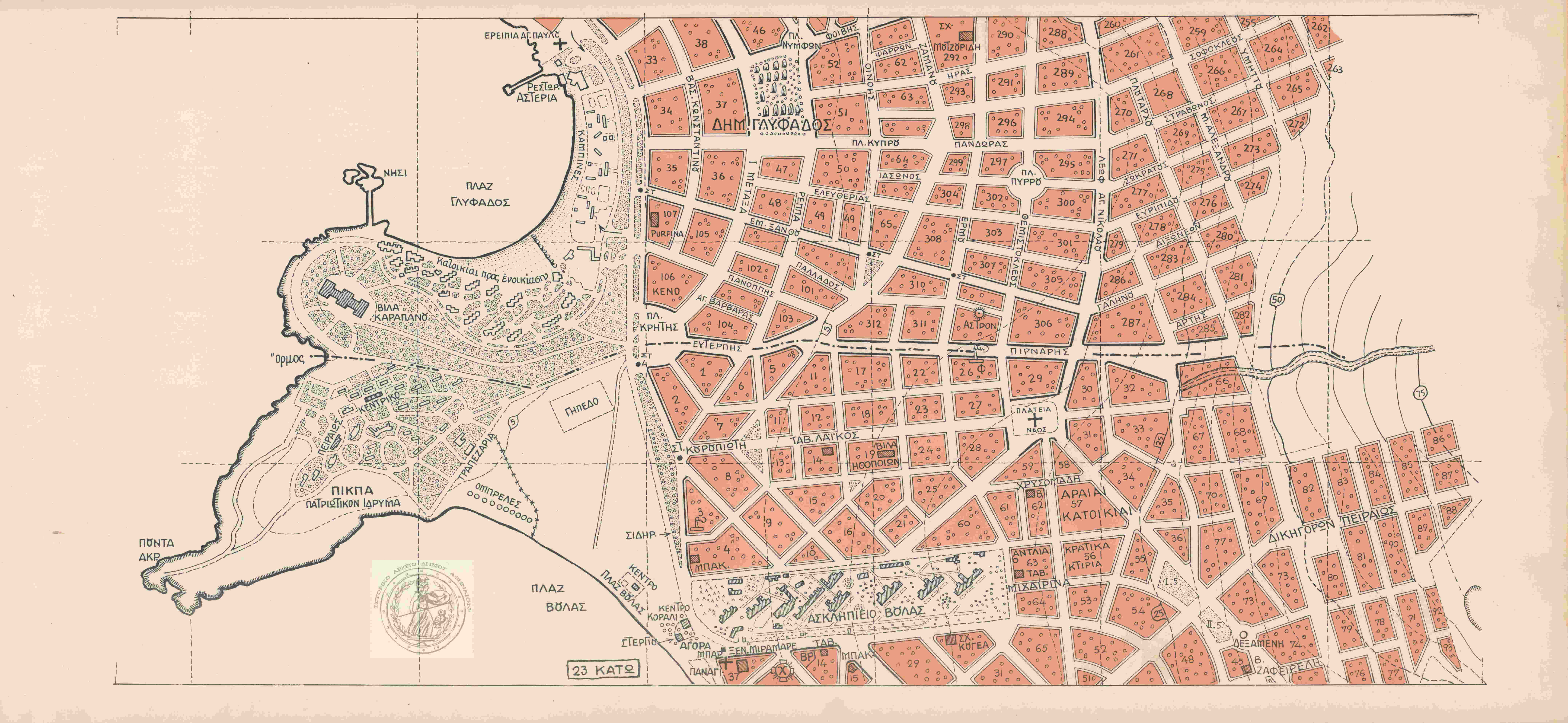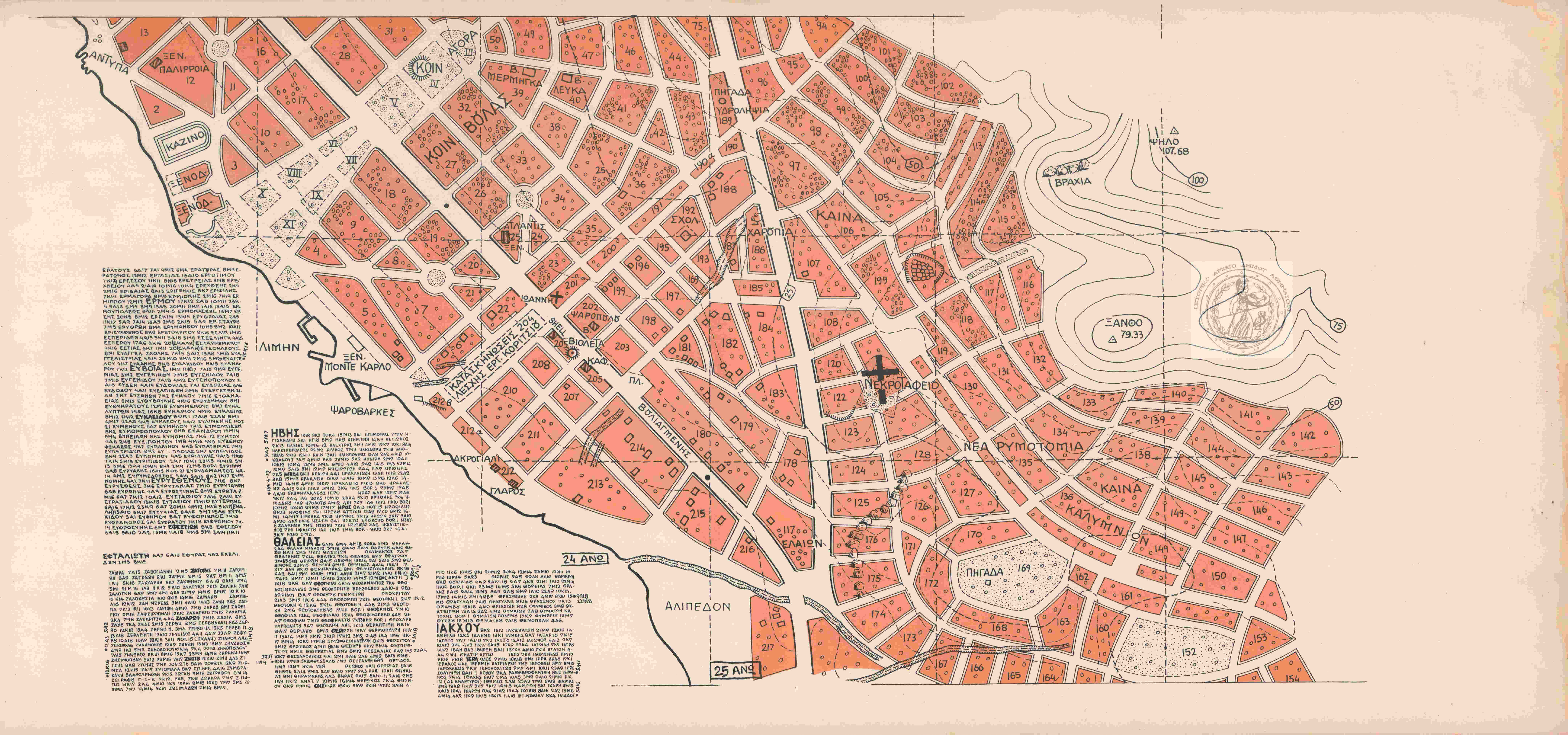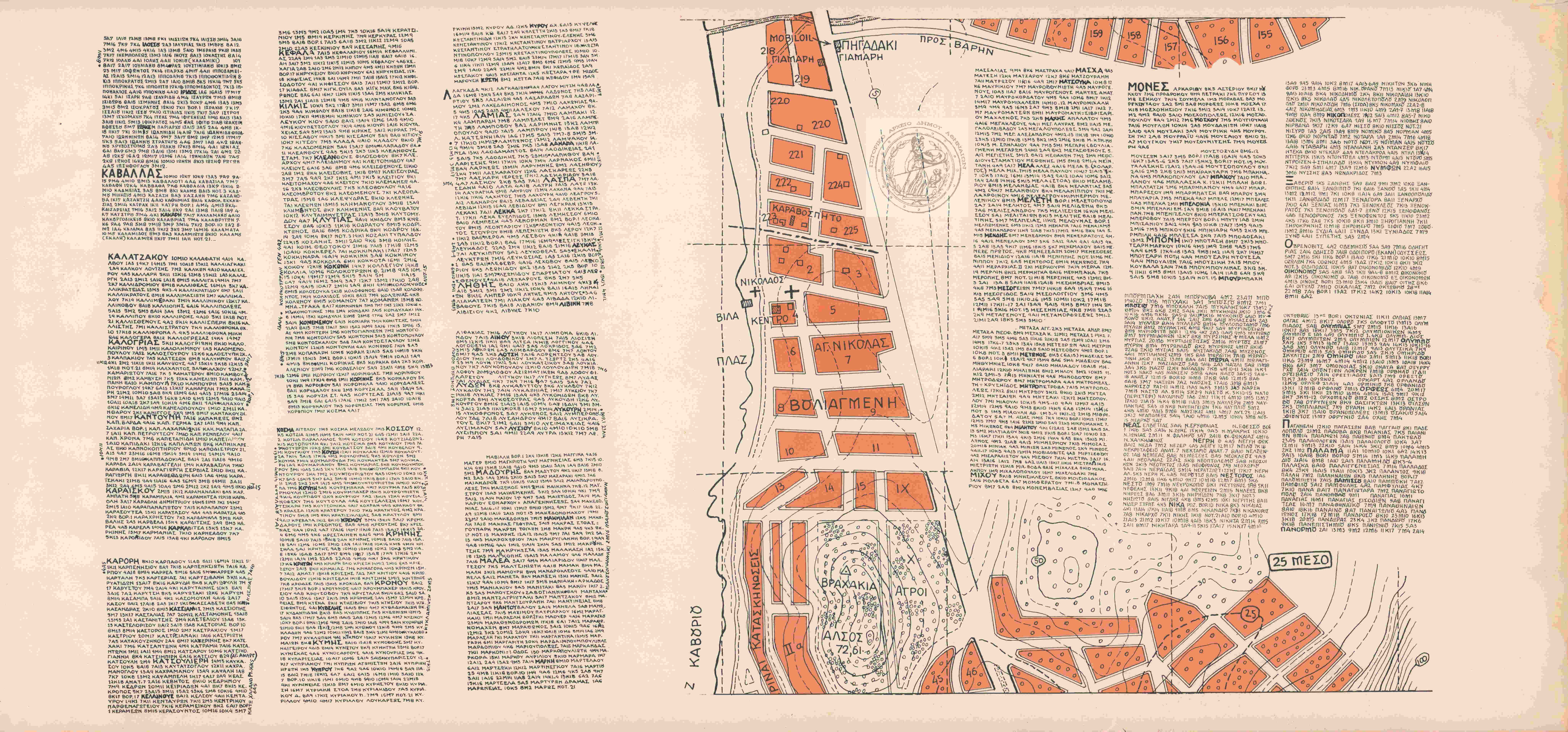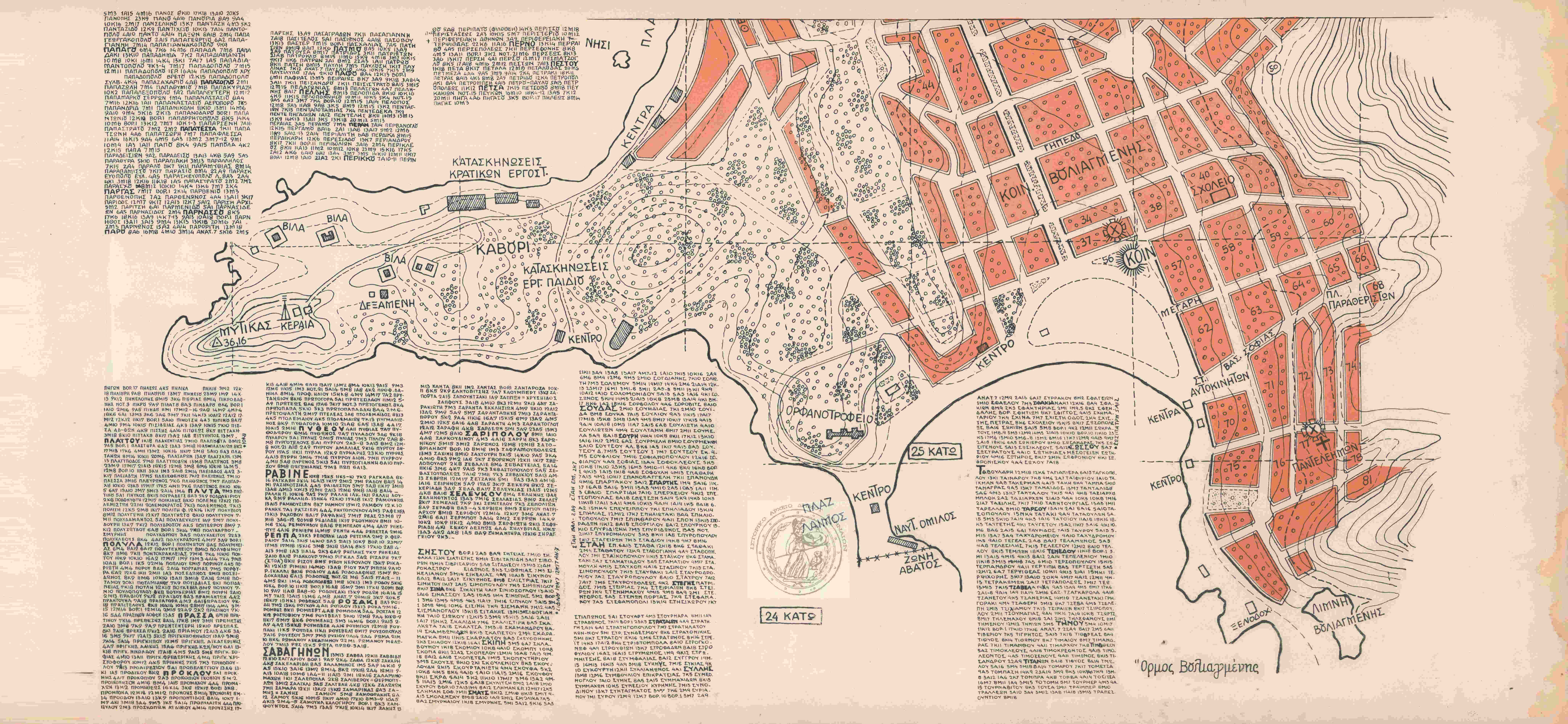

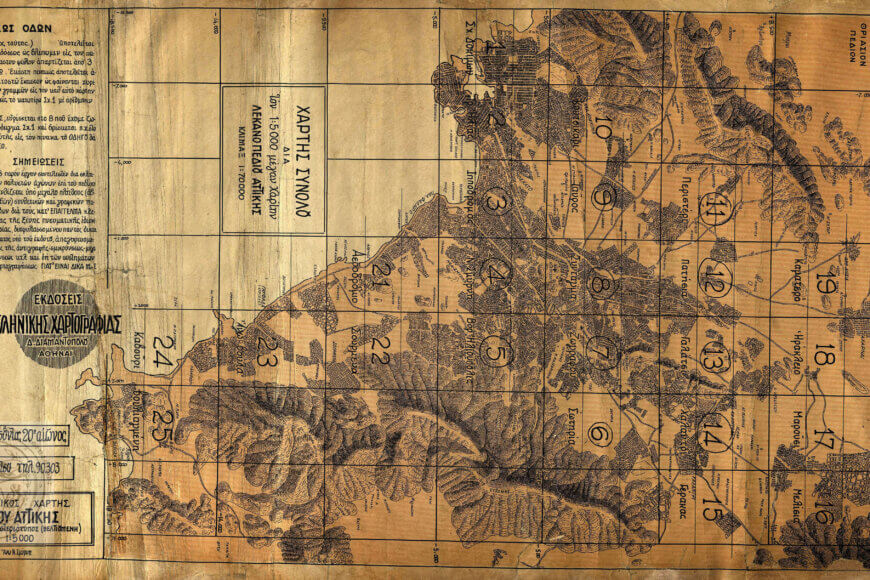
Please, hover over the image to reveal its Plan Reference Number
The “Elliniki Chartografia” (Greek Cartography) publishing house, founded by D. Diamantopoulos, produced maps during the post-WWII era (1948, and throughout the 1950s and 1960s). His large-scale map of Athens became widely recognizable, a common fixture in technical and real estate offices during the 1960s and 1970s. A later edition of this map was published by Kiki Diamantopoulou in 1964-65, consisting of 27 sheets at a scale of 1:5,000 (“Work 92”).¹
The Historical and Municipal Archives of Athens preserves an earlier edition (“Work 82”), estimated to date around 1955. Specifically, the publication date is described within the volume as “mid-20th century.” The archival records further note that it was designed by Nota Tsirigoti.
Technical Description and Structure
The Semi-cadastral Map of the Attica Basin consists of 25 sheets, each capturing a specific area of the basin. This division is presented on the first page via a “General Map” (index map) at a scale of 1:70,000, which features a grid correlating each sheet to a specific district or municipality (e.g., Sheet 4 corresponds to Nea Smyrni). Each sheet is further subdivided into three sections: Upper – Middle – Lower. The total of 75 sections is contained within 62 pages, as sections covering smaller areas are sometimes grouped on a single page. Although the map was bound, Sheets 18 and 19 are currently missing (only a fragment of Sheet 18 survives).
The introductory page includes a legend, street-finding instructions, company details, and notes. These notes inform us that the project was the result of “strenuous, multi-year efforts in the field.” To discourage plagiarism, the publisher incorporated a vast number of “harmless synthetic and graphic traps” (copyright traps). The justification provided is strikingly candid: “BECAUSE THEY ARE OURS.” The volume concludes with a street index (A-Z/Α-Τ), following the instructions provided on the first page.
Historical and Social Significance
The map provides a wealth of information in exceptional detail, recording land uses, businesses, workshops, industries, schools, cinemas, entertainment venues, public transport stops, police stations, churches, streams, and parks. Notably, it also preserves the “fresh memory” of historical events. For instance, at the Kaisariani Shooting Range, the following commemorative dedication is inscribed:
“To the 1000 Greek children who fell here for our homeland.” Similarly, at the 3rd Cemetery of Athens, a note marks: “Here lies Iro Konstantopoulou, aged 17, fallen for her country.”
Sheets from this map have been featured in exhibitions (e.g., Made in Greece, 14 Stories of Resistance – October 12, 1944: Athens Free), utilized in scientific research, and used by schools for local history programs.
Conservation and Digital Access
The Semi-cadastral Map of the Attica Basin was entrusted to the bindery of Evangelia Biza for the disassembly of the sheets and the conservation of the introductory page. It was digitized by the company IID (Infobank Interlease Dsa). These services were kindly offered pro bono to the Historical and Municipal Archives of the City of Athens, for which we express our gratitude.
¹ We would like to thank Evangelos Livieratos, Professor Emeritus of Geodesy and Cartography at the Aristotle University of Thessaloniki (AUTh), for his valuable information.